
Luxemcore Insights • Cost & Budget
Standard vs Mid-Range House Finish: What Really Changes?
Clients often ask us what actually changes between Standard and Mid-Range finish. The easiest answer is: not the basic responsibility to build correctly—the difference should be in selections, detailing and allowances you can see and feel.
Standard vs Mid-Range house finish is mainly a difference in material selections, fixture allowances, detailing, cabinetry, hardware, windows and aesthetic flexibility. Structural safety, waterproofing and essential MEP quality should not be downgraded just because the finish package is Standard.
We prefer comparing finish levels room by room. Labels such as “standard,” “semi-elegant” or “high-end” can mean different things to different contractors unless the actual materials and allowances are written down.
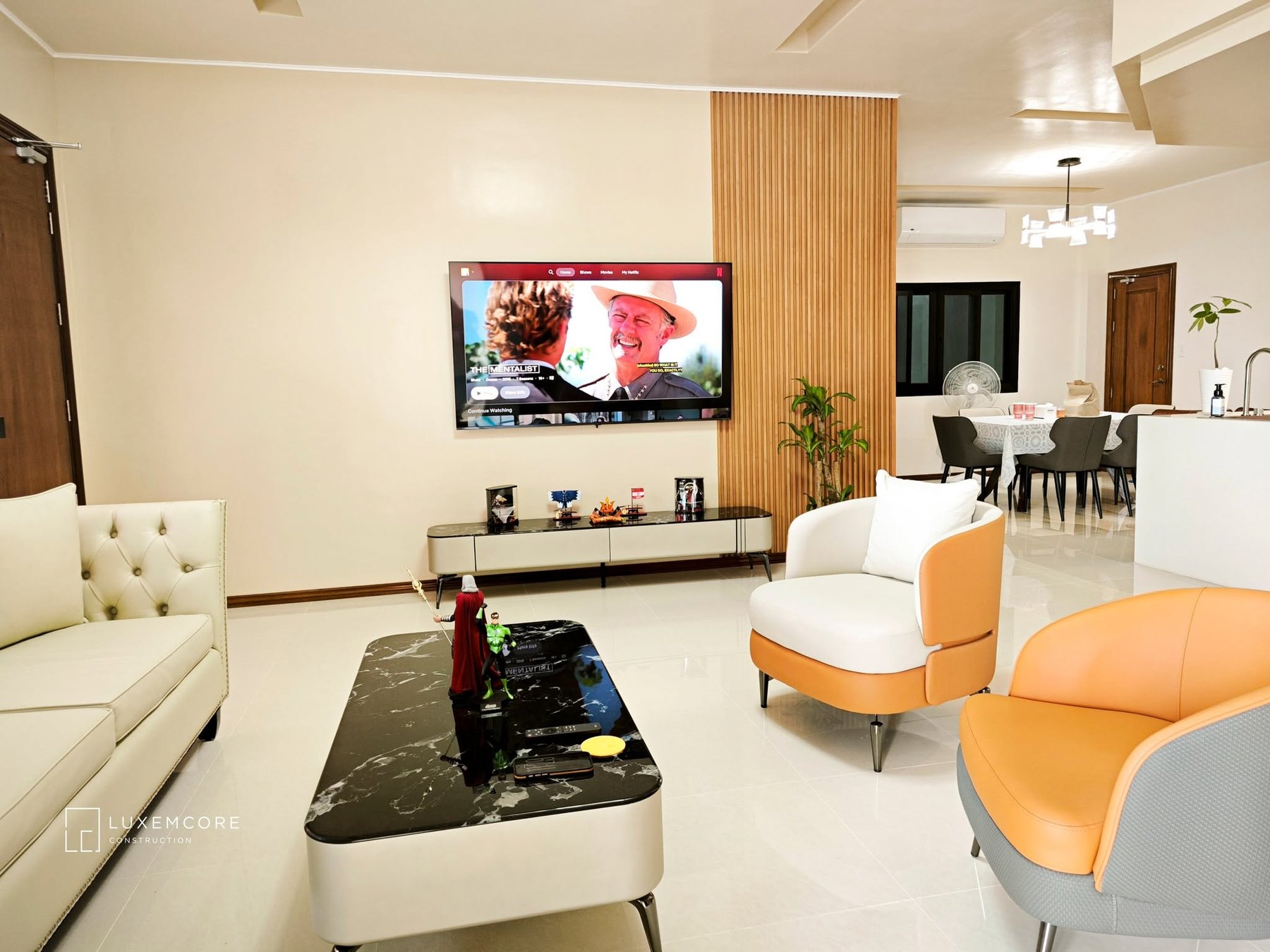
The difference becomes obvious in repeated everyday items
A slightly better floor tile, door hardware, window profile, kitchen hinge, drawer guide, sanitary fixture and lighting selection may not look dramatic individually. Multiply those decisions across the whole house and the budget difference becomes real.
What we do not want “Standard Finish” to mean
It should not mean weak waterproofing, undersized electrical protection, questionable plumbing, poor roof detailing or unfinished essential work. Those are building-performance issues, not decorative upgrades.
Where Mid-Range usually gives the owner more freedom
Mid-Range often allows better-looking and more durable selections without entering the price level of highly customized luxury work. It can also reduce the number of compromises when the owner has specific aesthetic preferences.
Ask for an allowance, not only a label
If the quotation says “mid-range tiles,” ask what value per square meter is carried. If it says “standard sanitary fixtures,” ask what brands or allowance are assumed. Written allowances make upgrade decisions much easier to control later.
Our approach: keep the hidden essentials disciplined, vary the visible finish
That separation is important to us. The client should be able to choose a more economical finish package without wondering whether critical construction quality was also reduced behind the walls.
Frequently asked questions
Does Standard Finish mean low quality?
It should not. Standard finish should describe more controlled finish selections, not weak structural work or incomplete essential systems.
What usually changes most in Mid-Range Finish?
Material allowances and design flexibility commonly increase for tiles, cabinetry, sanitary fixtures, hardware, windows, lighting and façade treatments.
Can I upgrade finishes after turnover?
Many visible finishes can be upgraded later, but some choices are cheaper and cleaner to coordinate during construction—especially cabinetry layouts, concealed electrical work and wet-area details.
Should waterproofing change between finish packages?
Critical waterproofing should be based on the technical requirement of the area, not treated as a cosmetic upgrade.
Is Mid-Range always the better choice?
Not necessarily. It is more suitable when the owner values broader material choices and a more refined turnover result. A disciplined Standard Finish may be the better fit when the budget ceiling is firm.
Comparing Standard and Mid-Range options?
Ask for a room-by-room finish schedule and written allowances. That gives you a much clearer picture than the finish label alone.
Start a Project Discussion