
Case Study · Residential Construction
Vista Verde Tayabas Residence
This project did not become a case study because everything went according to plan. It became one because real construction rarely does—and the decisions made when site conditions, weather, coordination, and quality begin to compete are what reveal a contractor’s actual capability.
Project Overview
At Vista Verde, difficult excavation conditions, prolonged rain, structural sequencing, embedded services, multiple finishing trades, and final rectification all had to be managed as one delivery problem. The finished residence matters, but so does the documented process behind it: how the team adapted, coordinated, checked, and carried the work through turnover.
Site Conditions & Earthworks
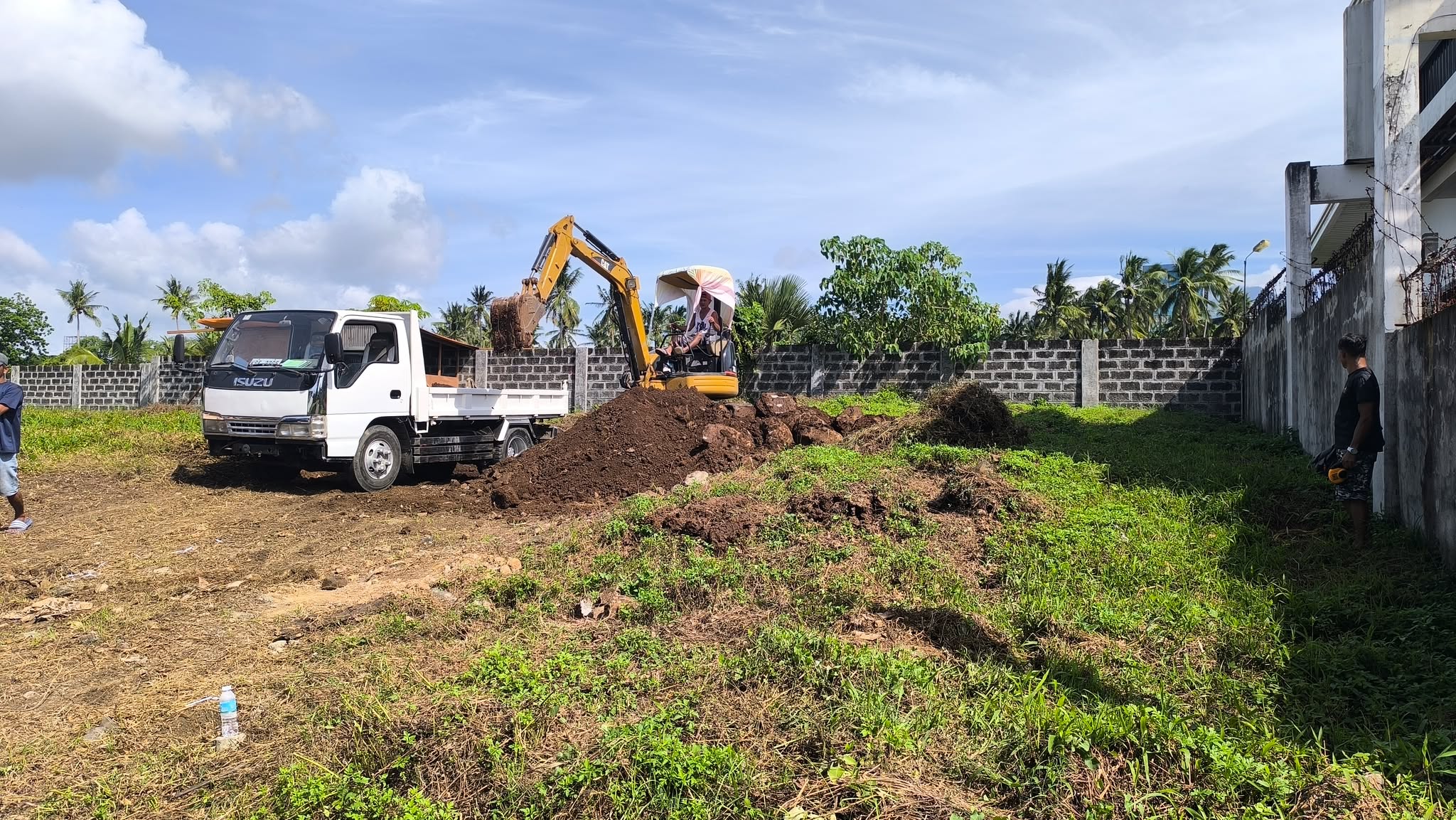
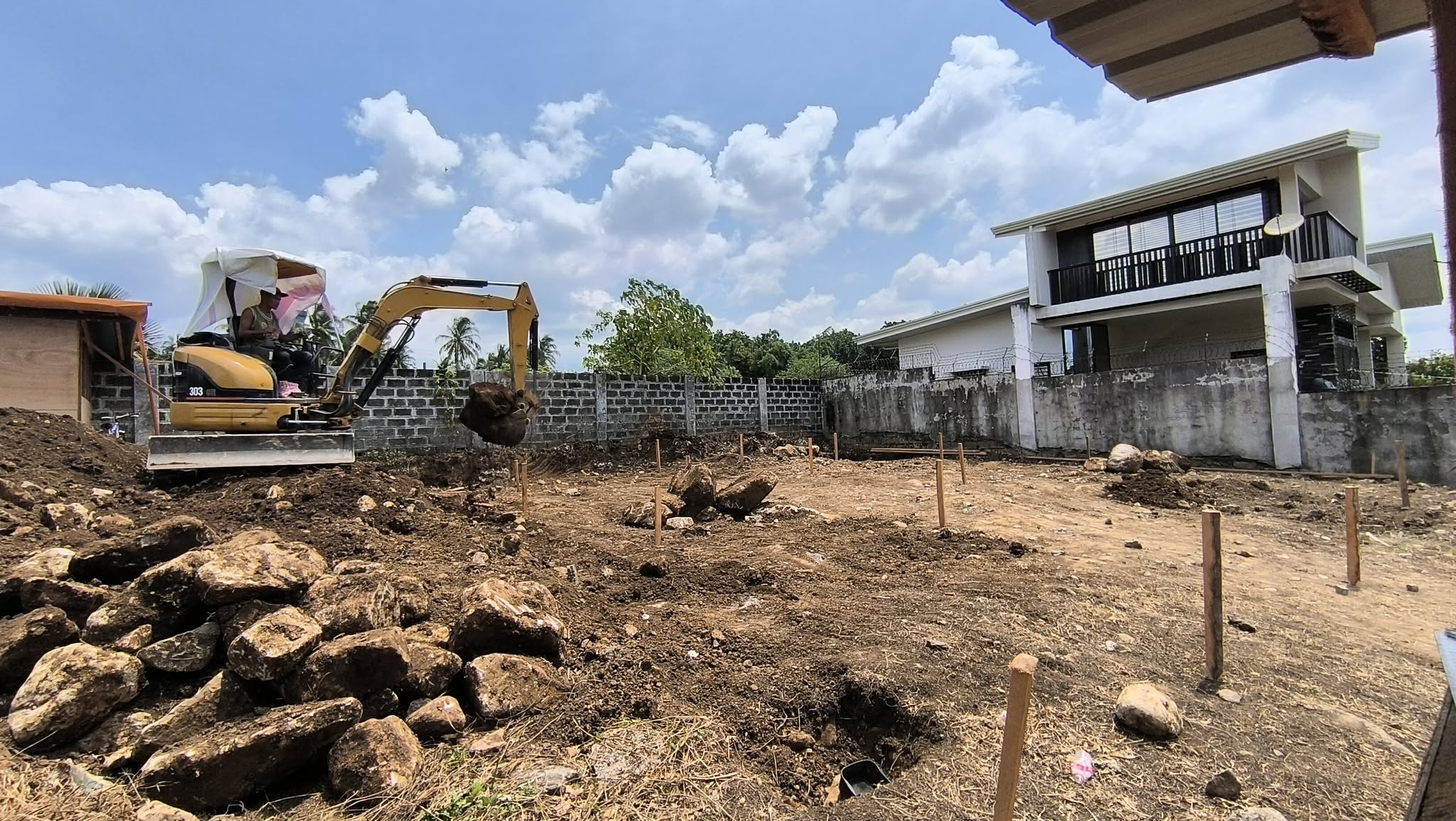
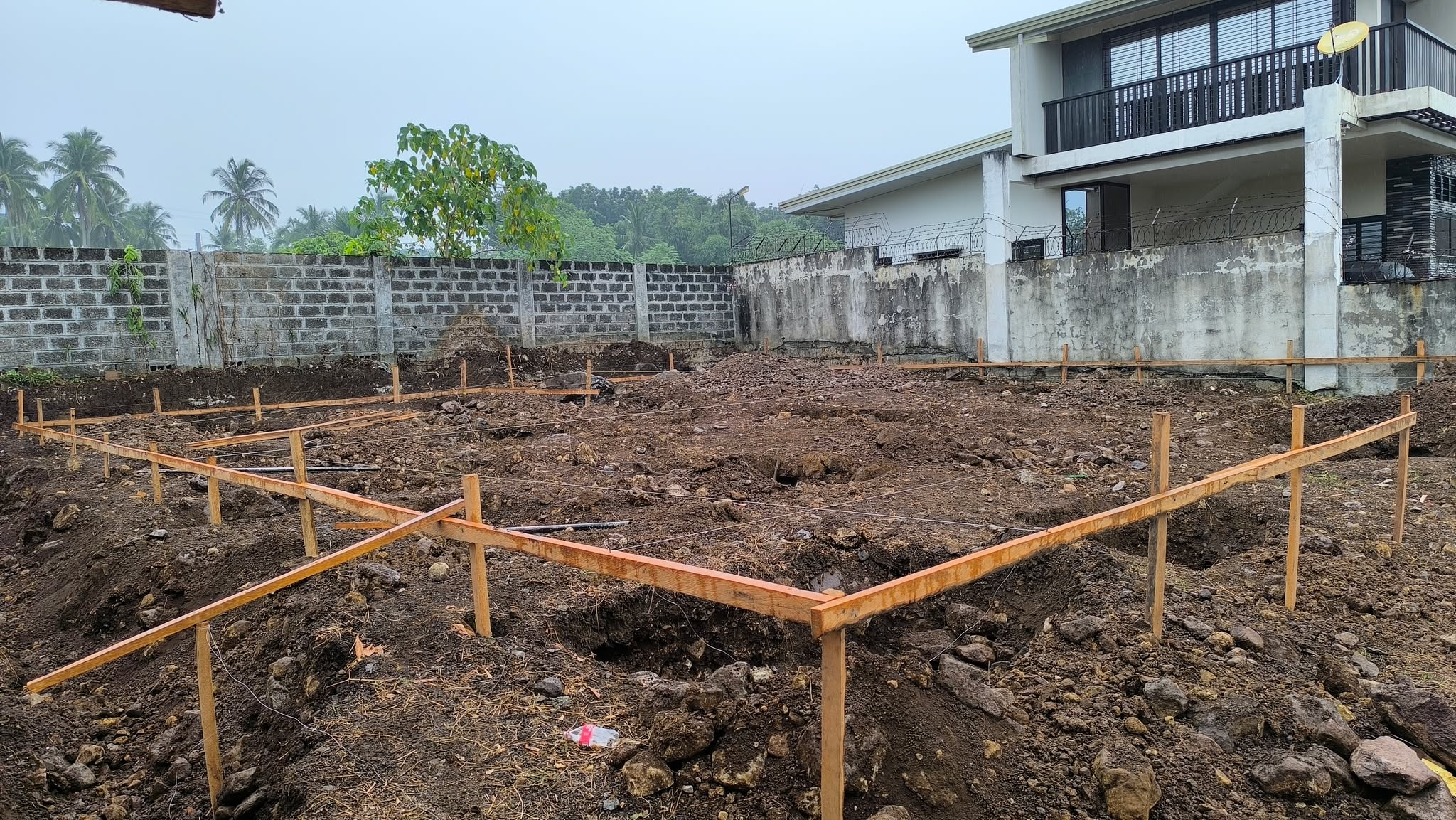
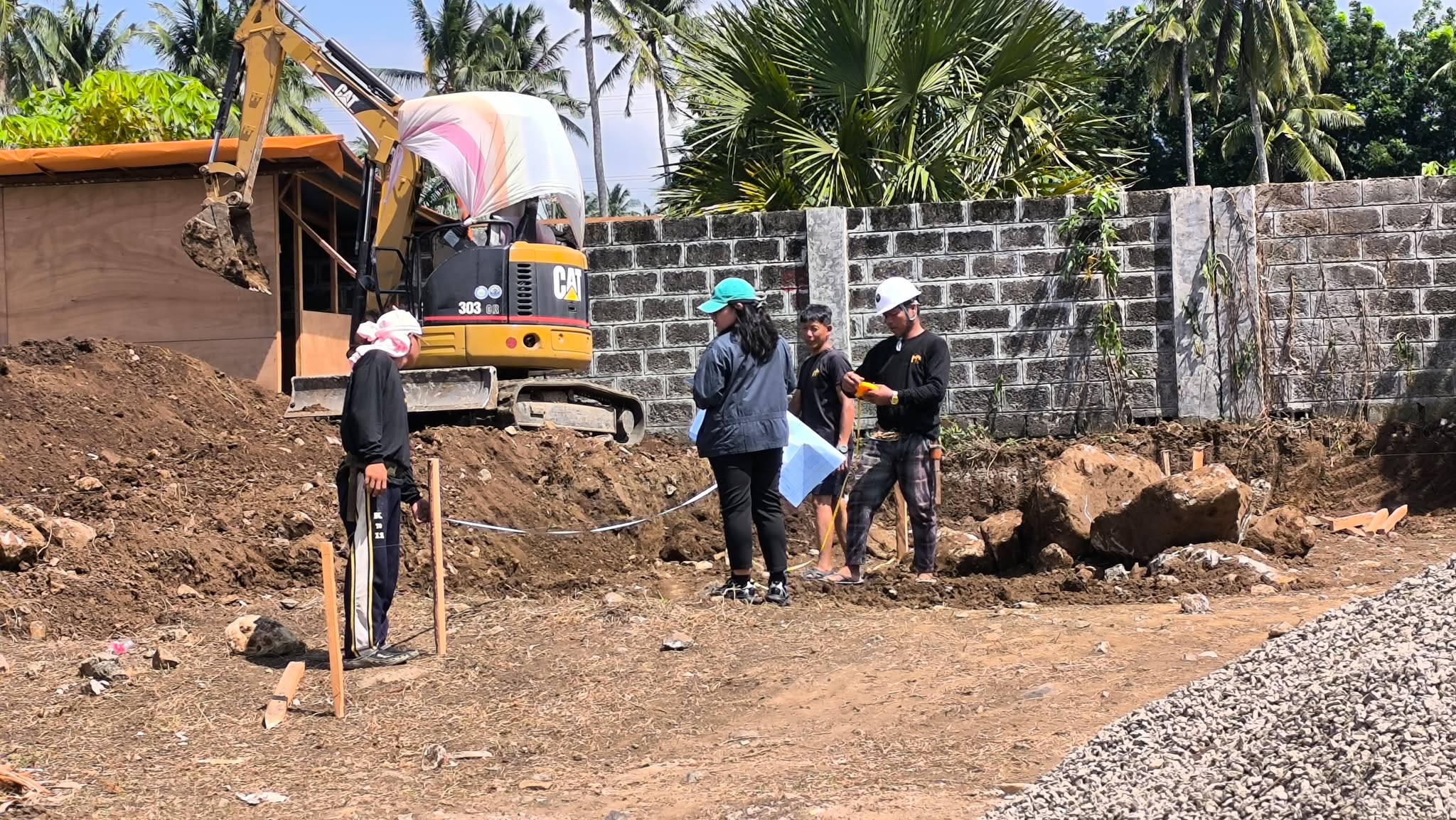
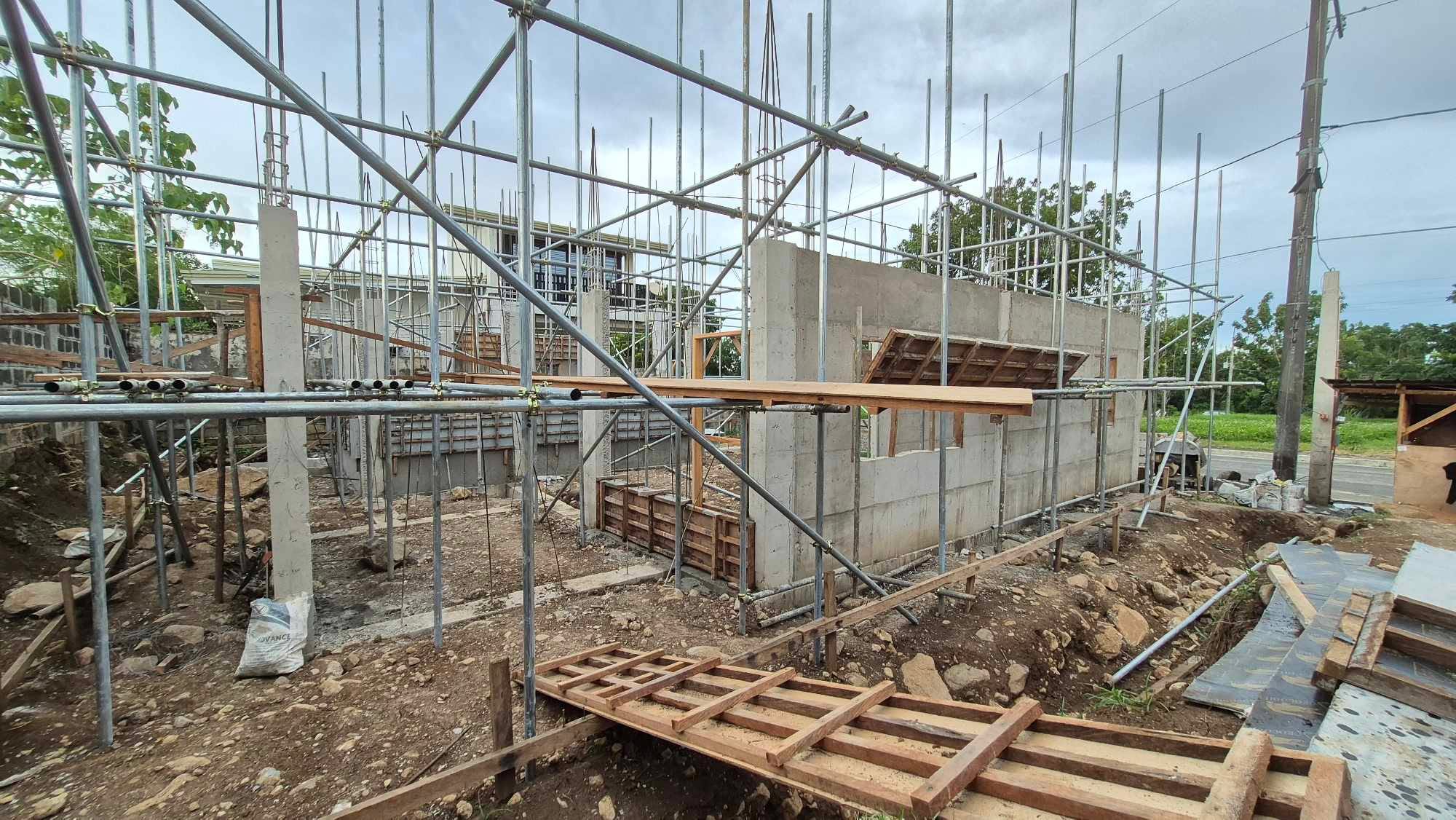
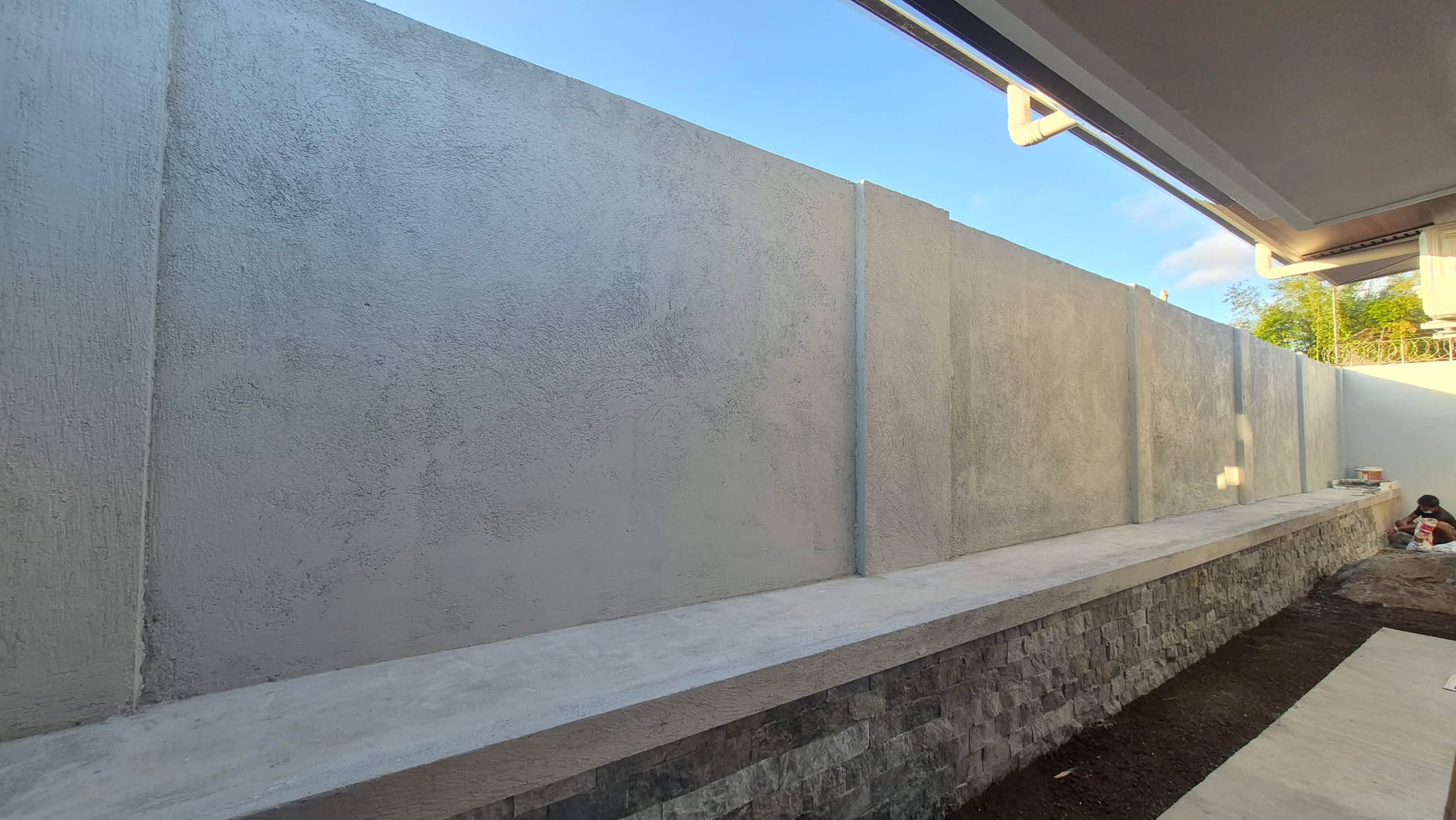
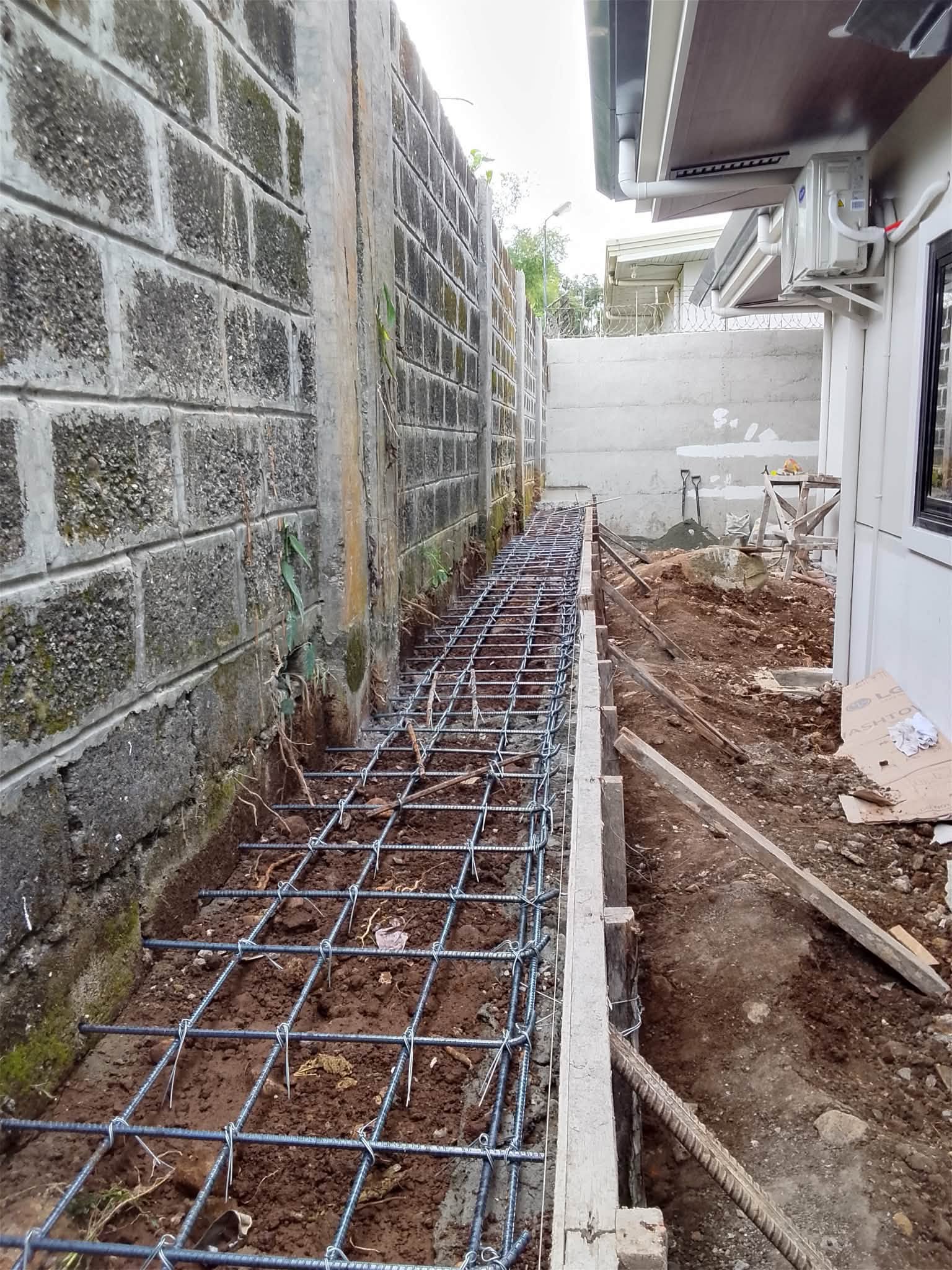
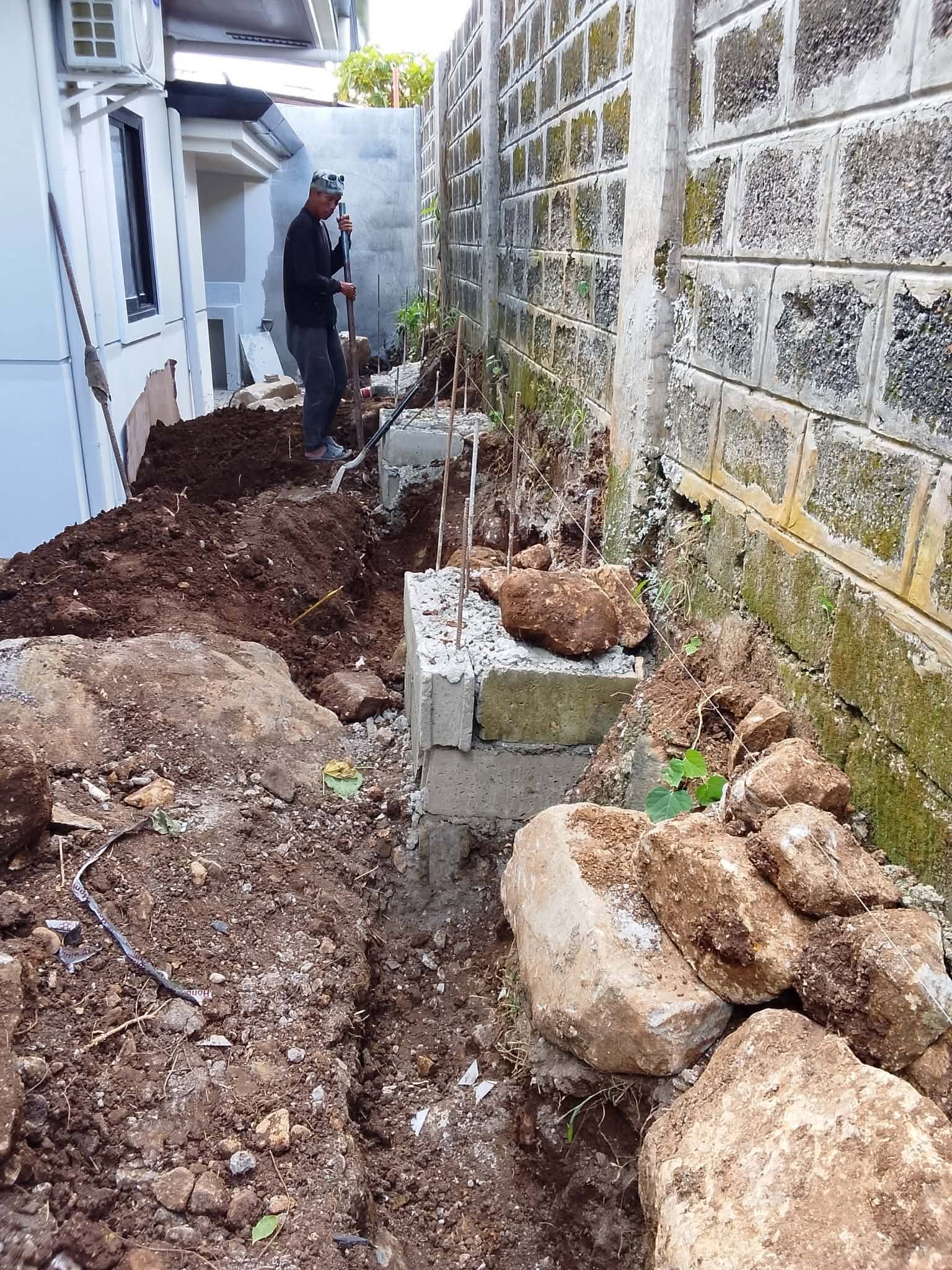
The sloping site required substantial cutting and export of soil. During excavation, large rock formations made mechanical excavation more difficult than anticipated. Cutting at the rear also exposed the shallow foundation of an existing fence wall. Rather than leave the condition vulnerable, the team introduced a supporting retaining solution designed to stabilize the area while remaining visually compatible with the residence.
Foundation Work During Prolonged Rain
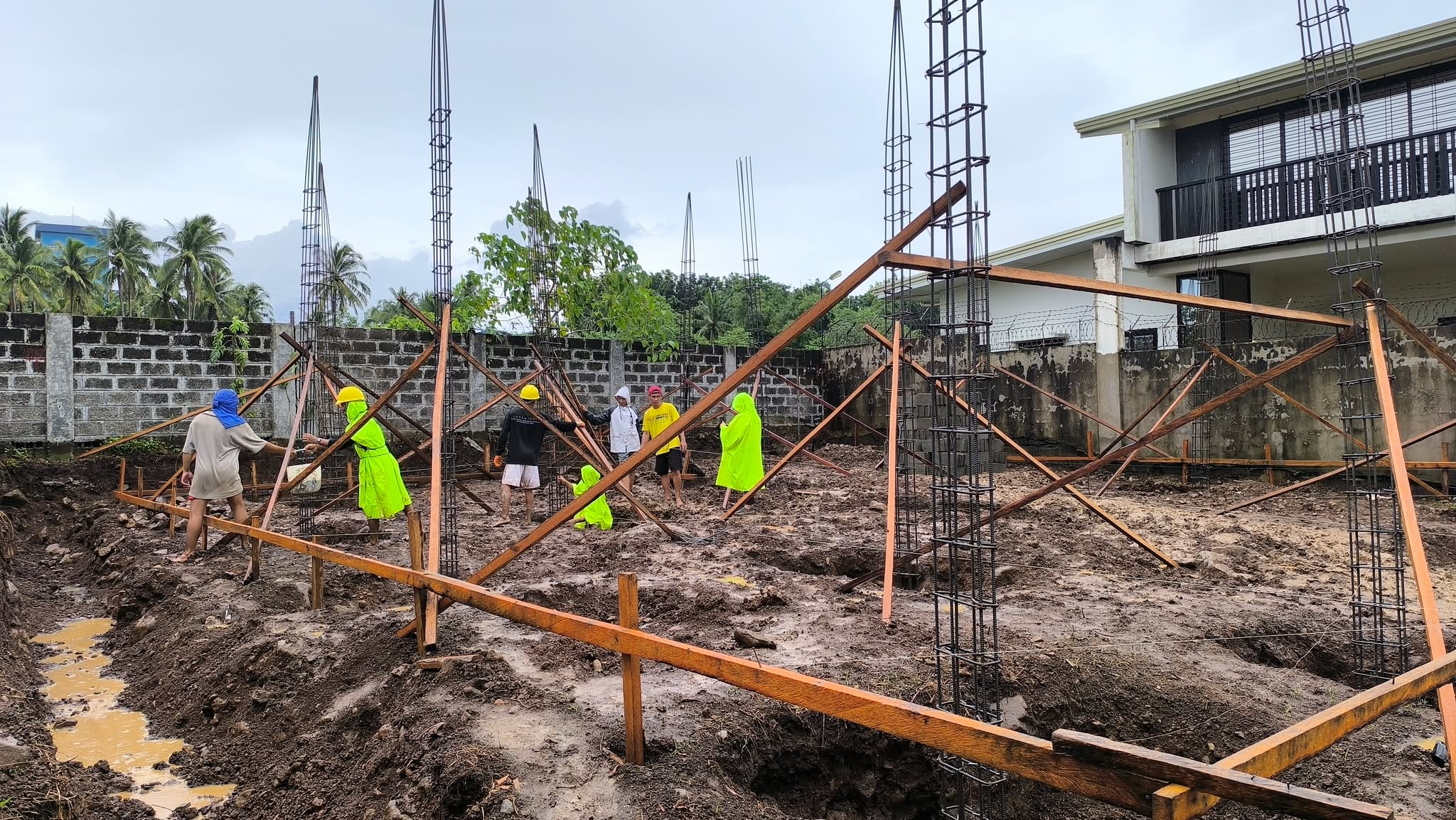
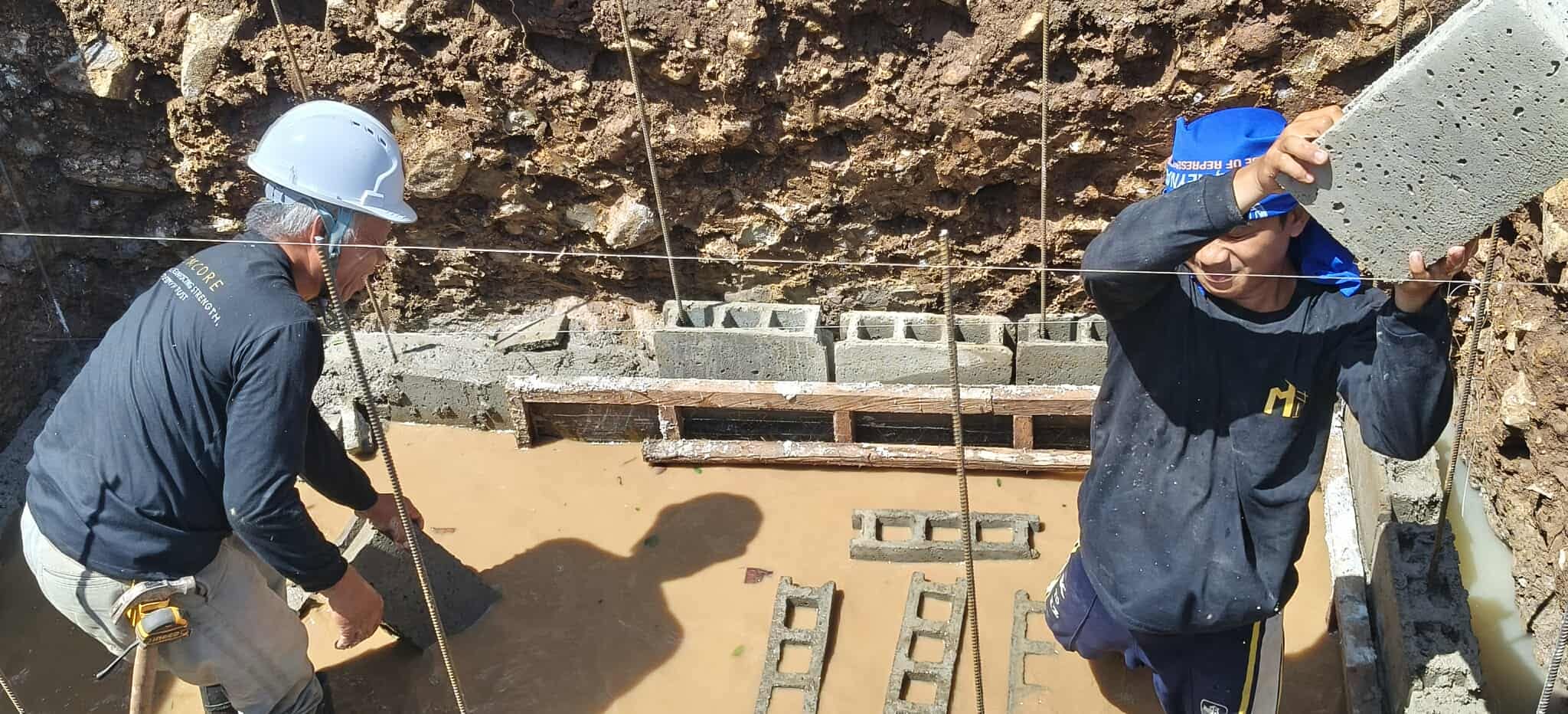
Construction began during the rainy season, with repeated storms causing footing excavations to collect water. Luxemcore maintained progress through active dewatering, appropriate PPE and rain protection, and careful scheduling of foundation activities around workable weather windows.
Cast-in-Place Concrete Wall System
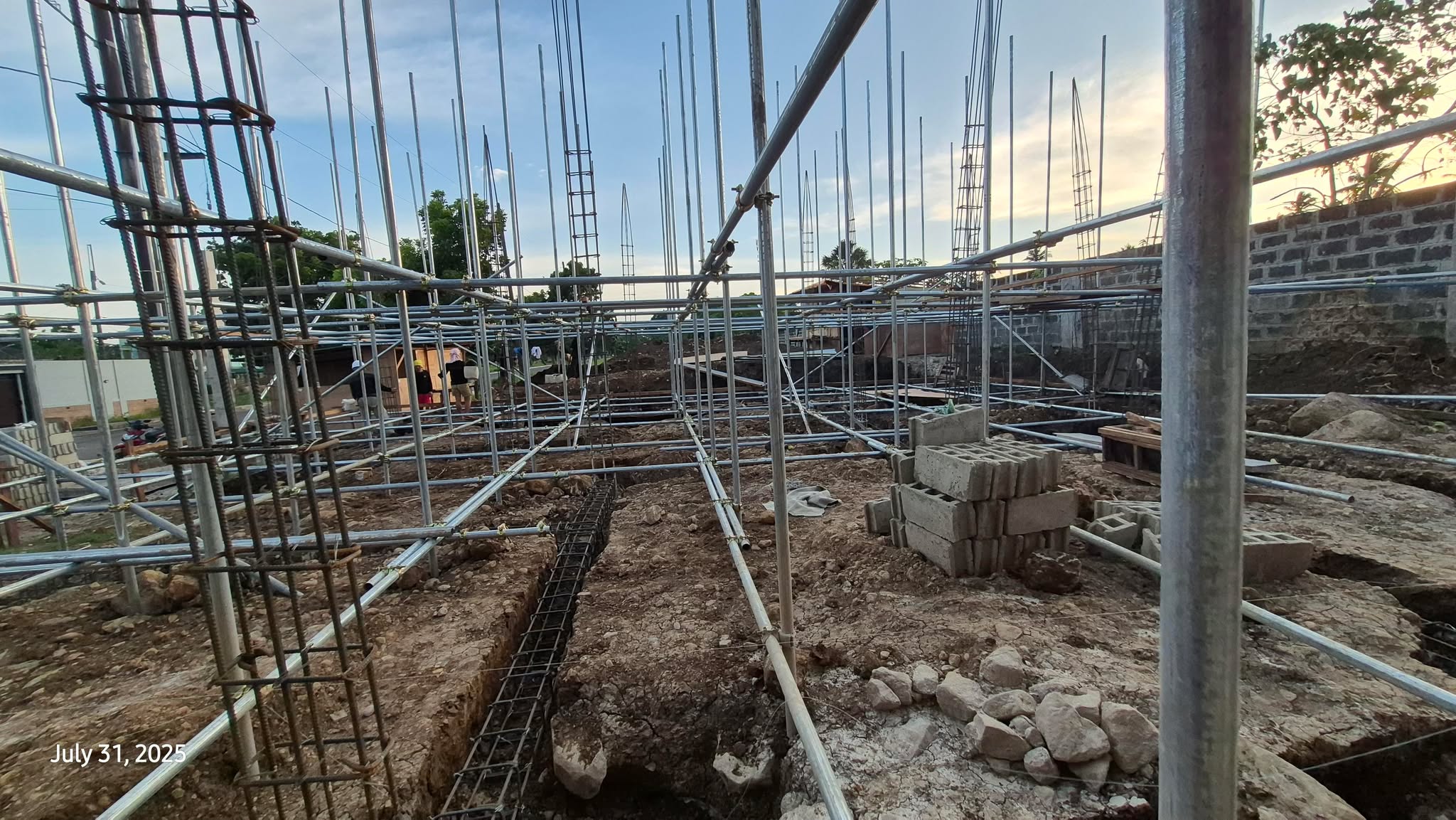
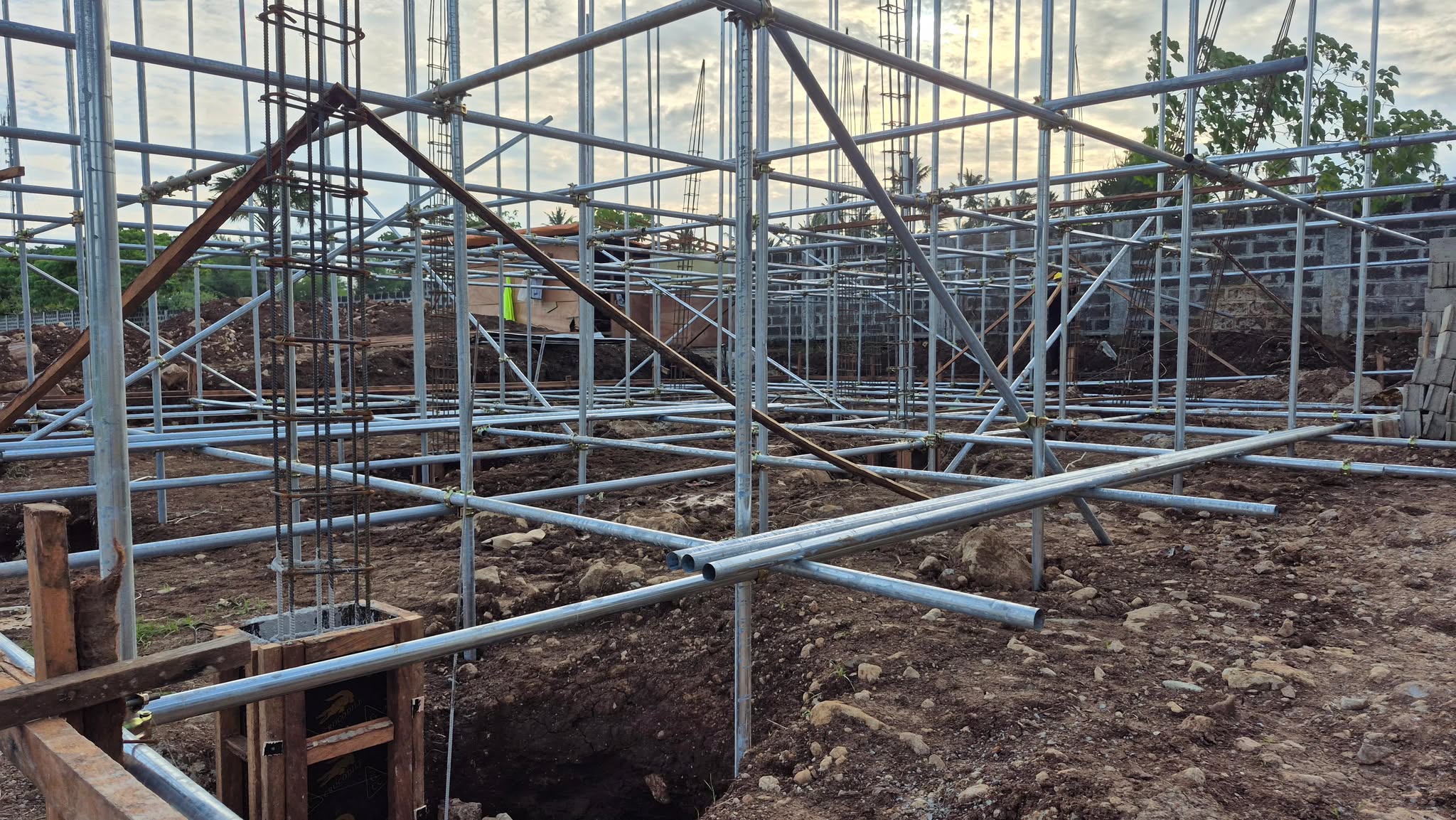
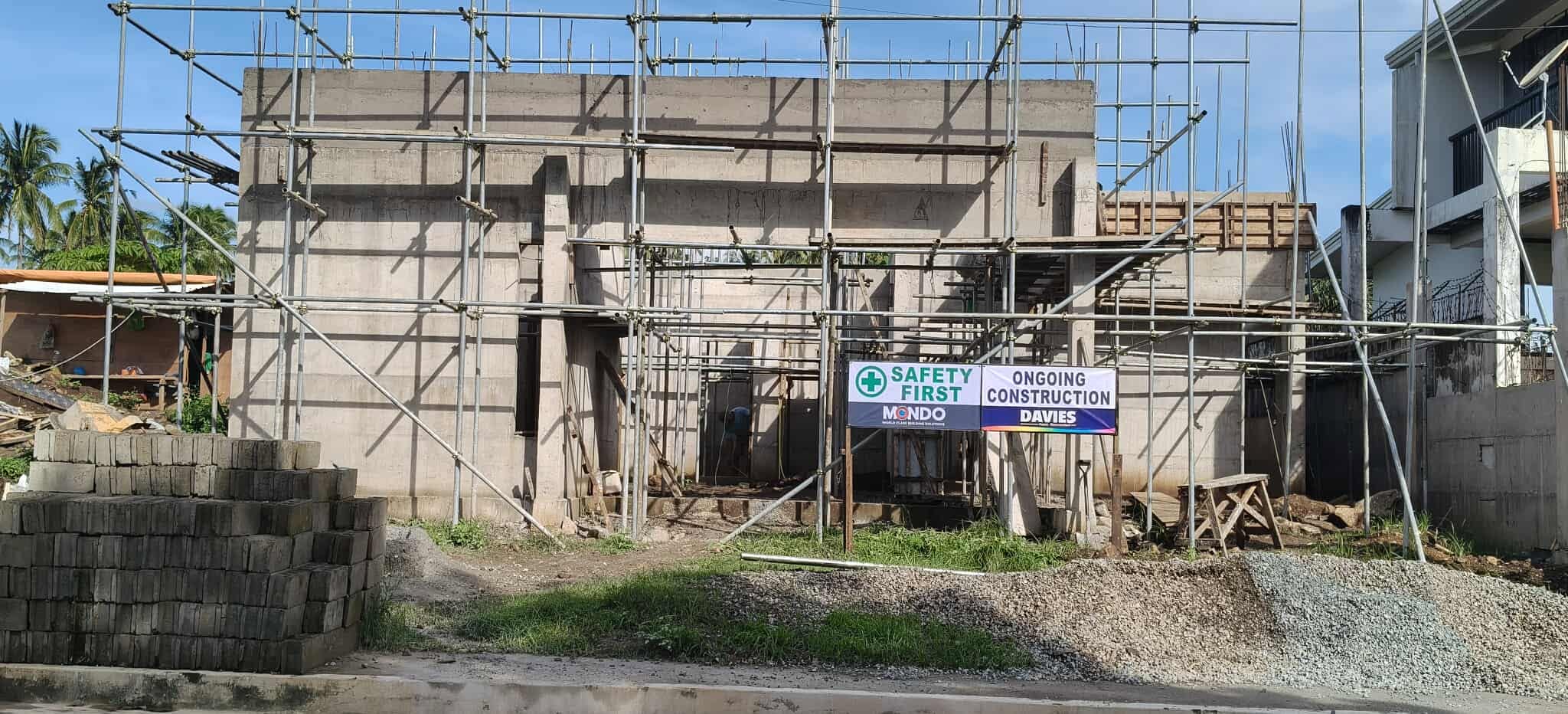
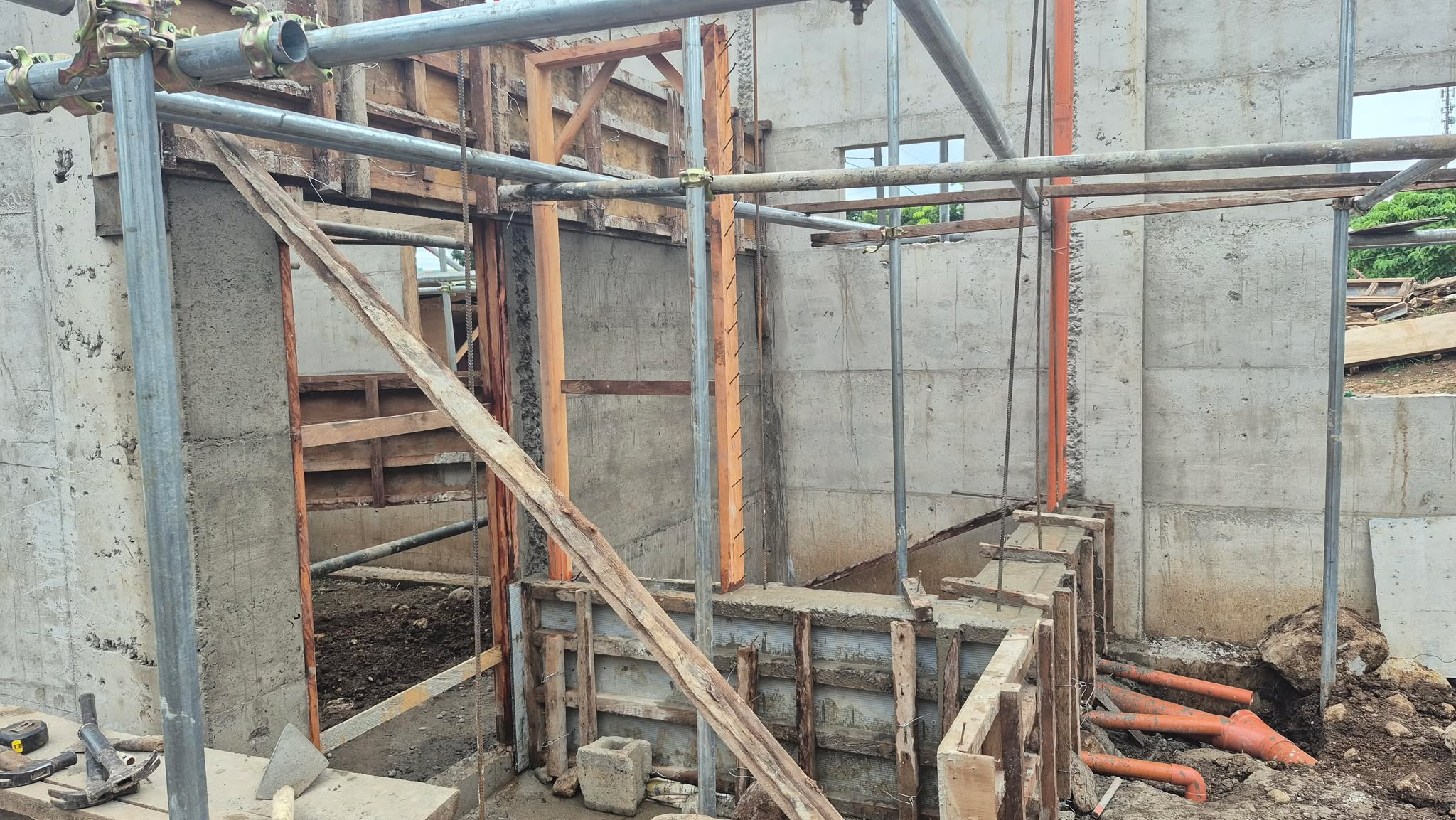
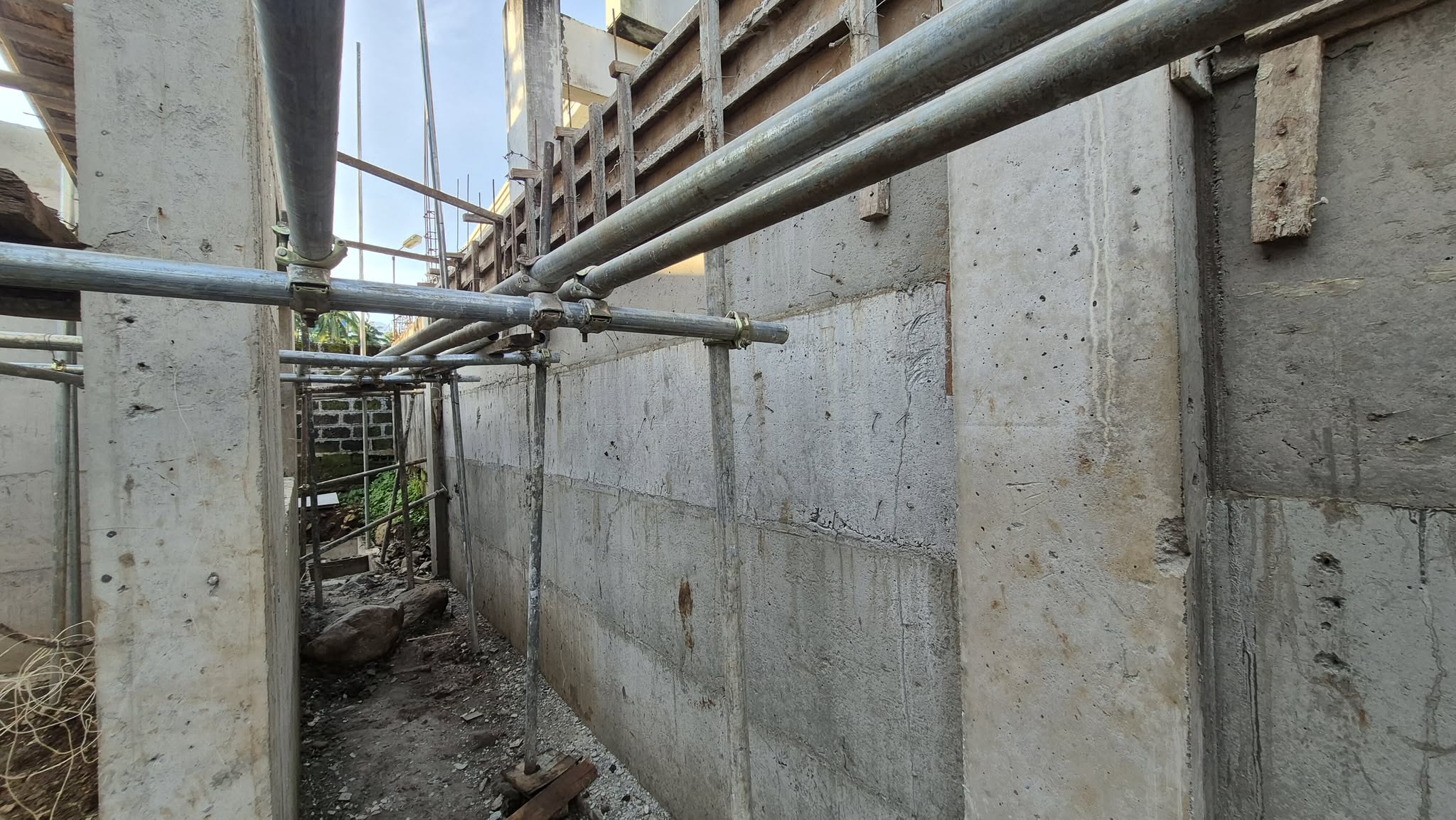
The residence used a cast-in-place concrete wall approach with reusable marine-plywood formwork. The system required controlled formwork alignment, reinforcement and concrete placement while producing a strong monolithic wall assembly and a comparatively smooth concrete surface for succeeding finishes.
Roofing & Weather-Responsive Scheduling
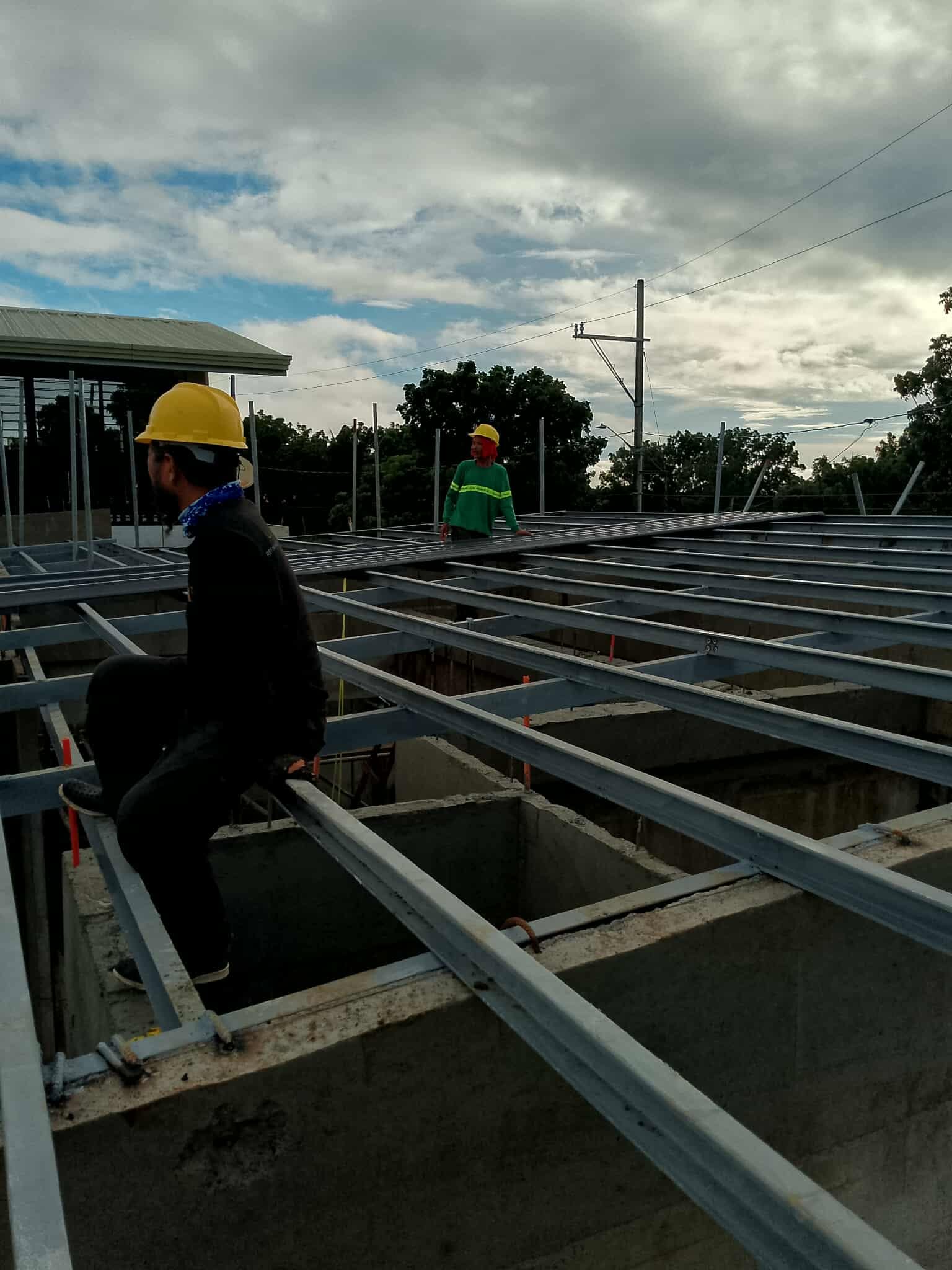
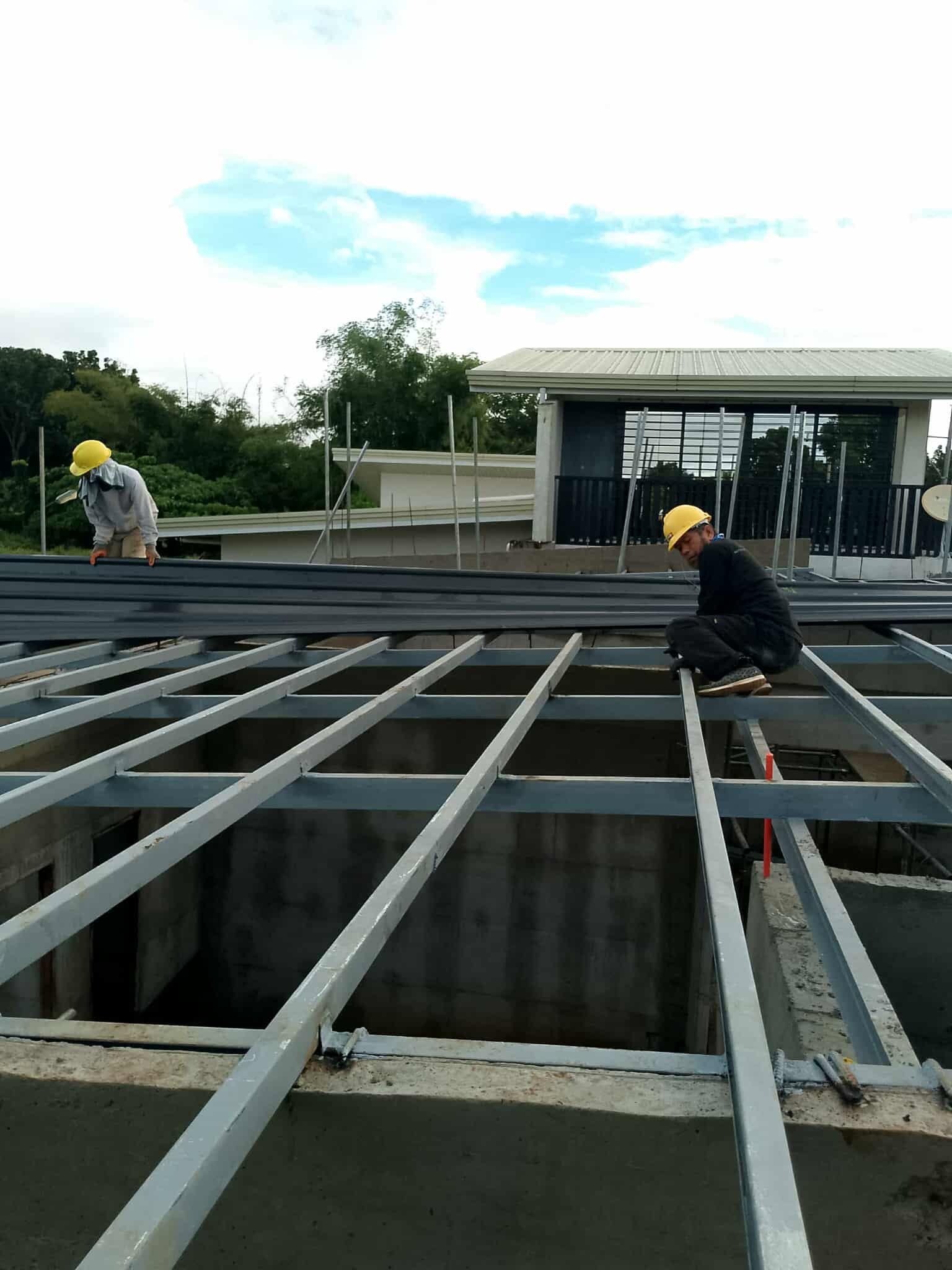
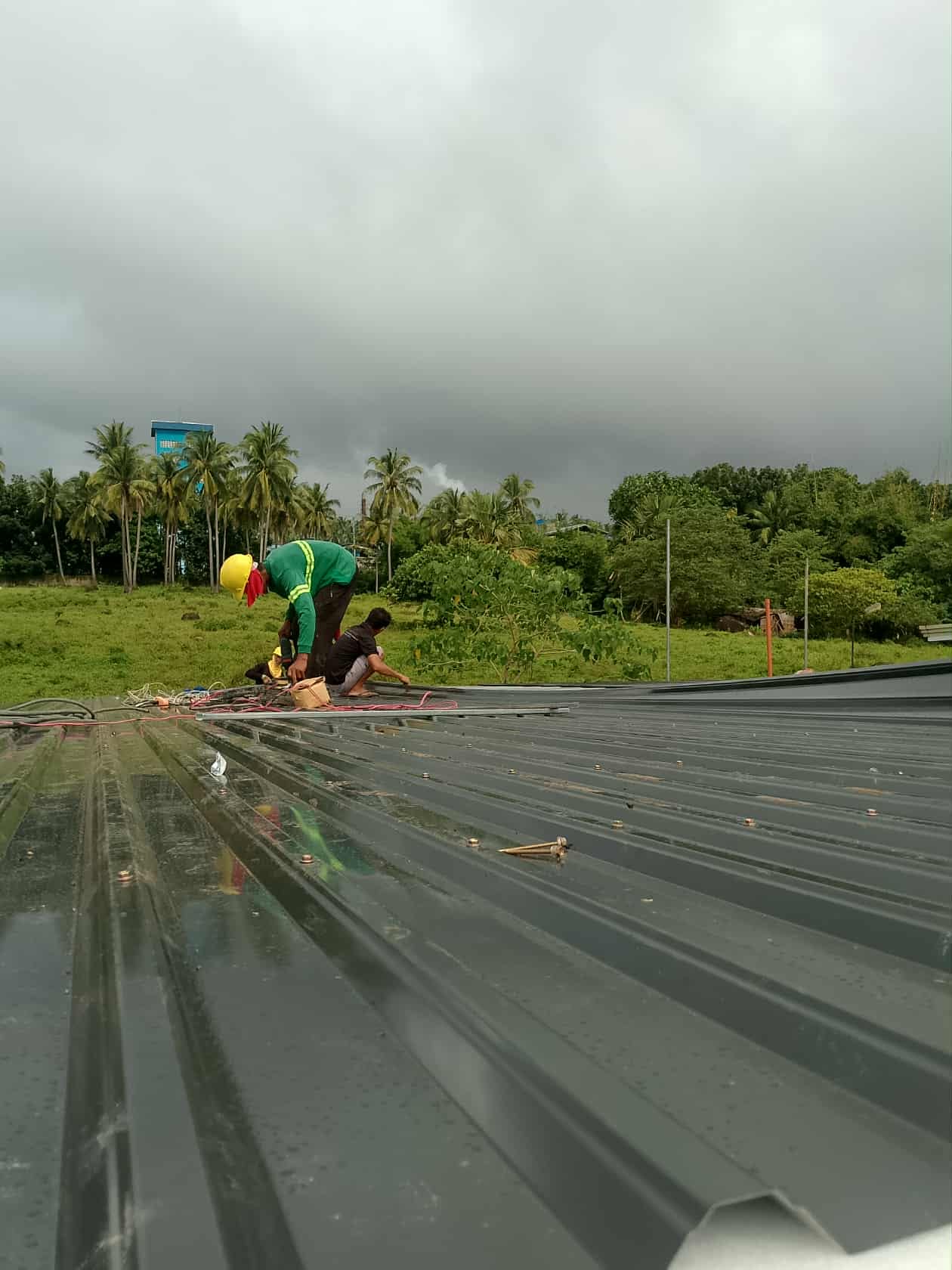
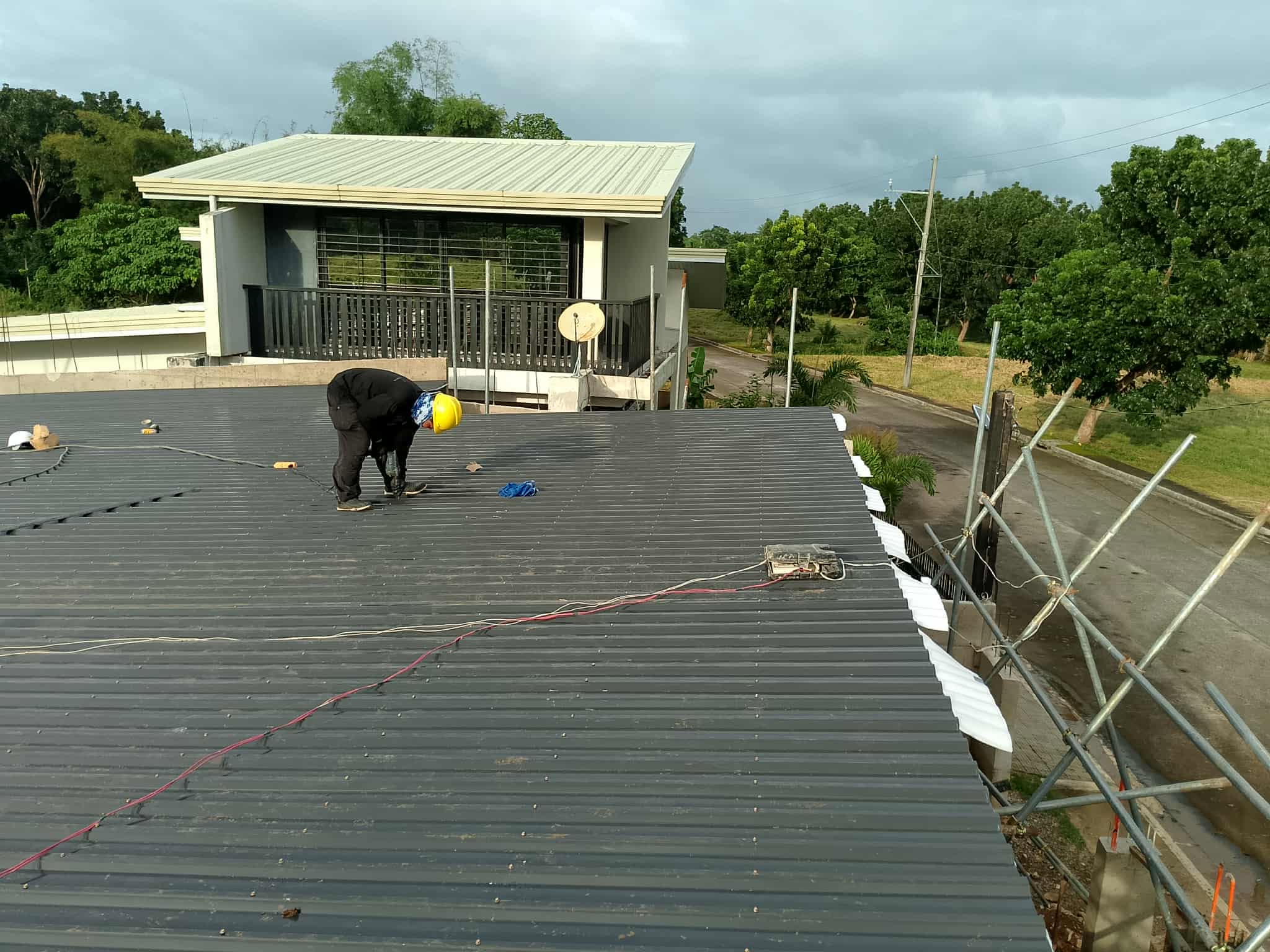
When favorable weather opened, the team maximized productive hours on roof-truss fabrication, welding and roofing activities. Extended working periods were used selectively to recover progress while keeping critical exterior work moving.
Slab-on-Grade Preparation
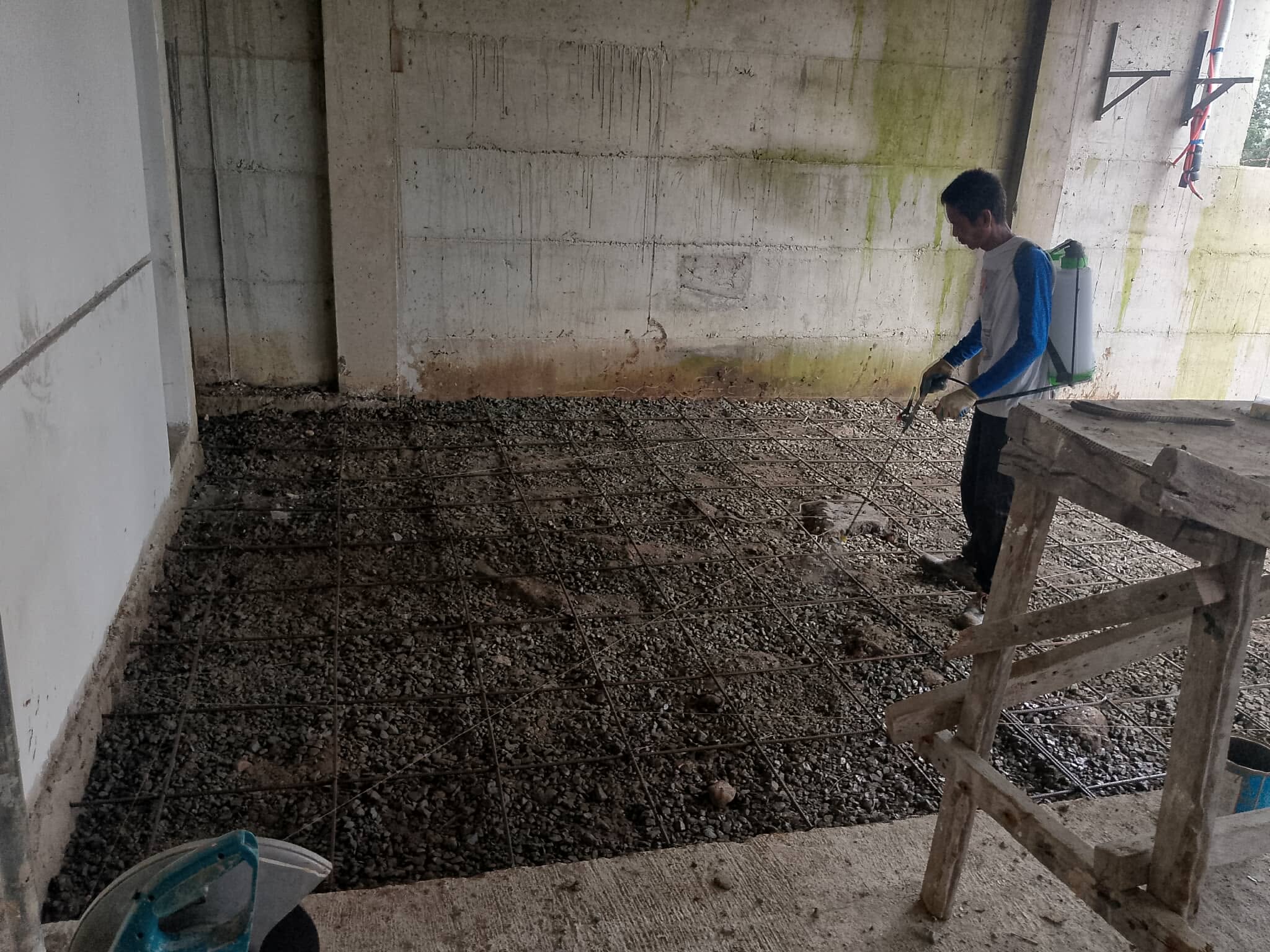
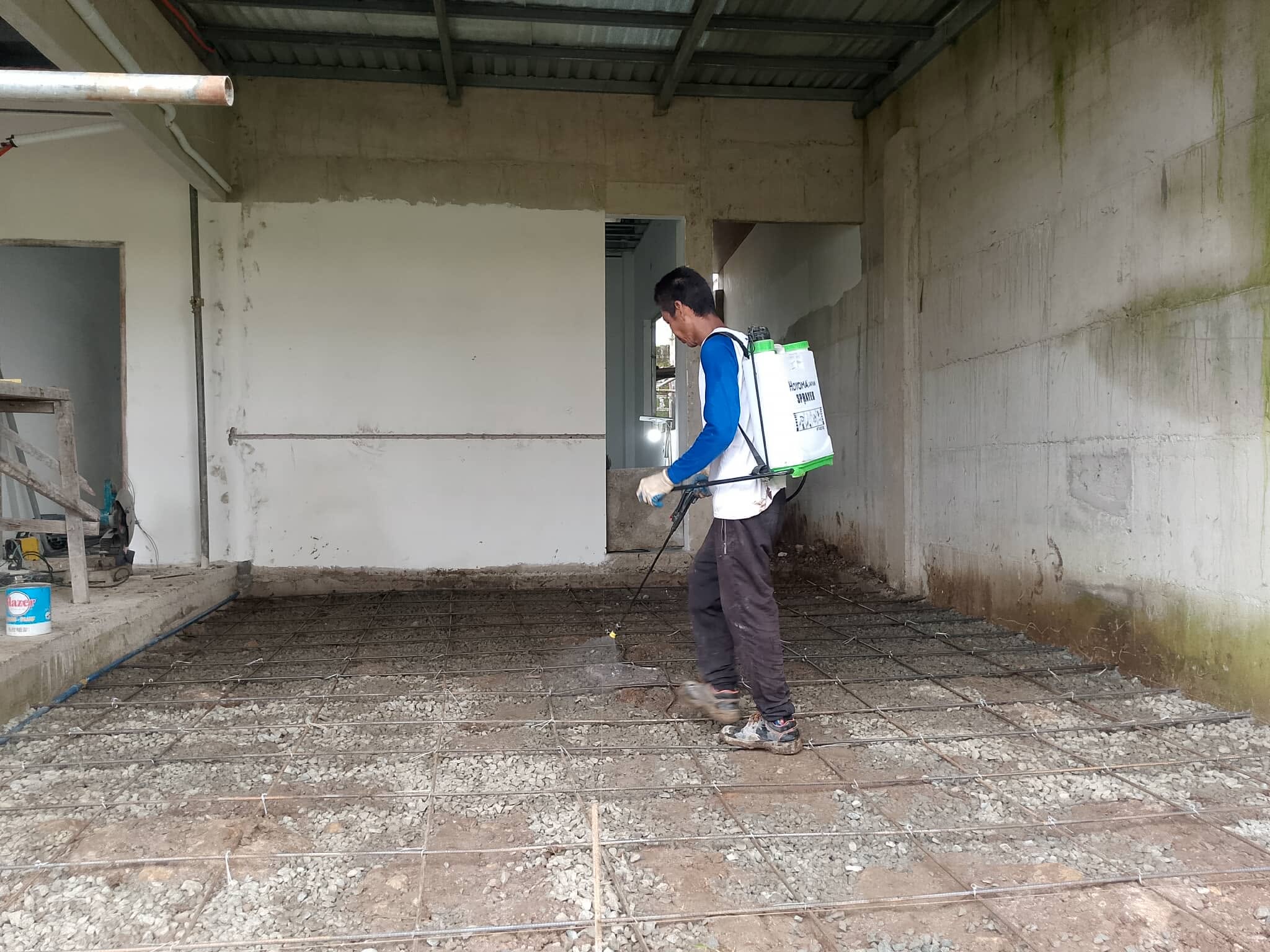
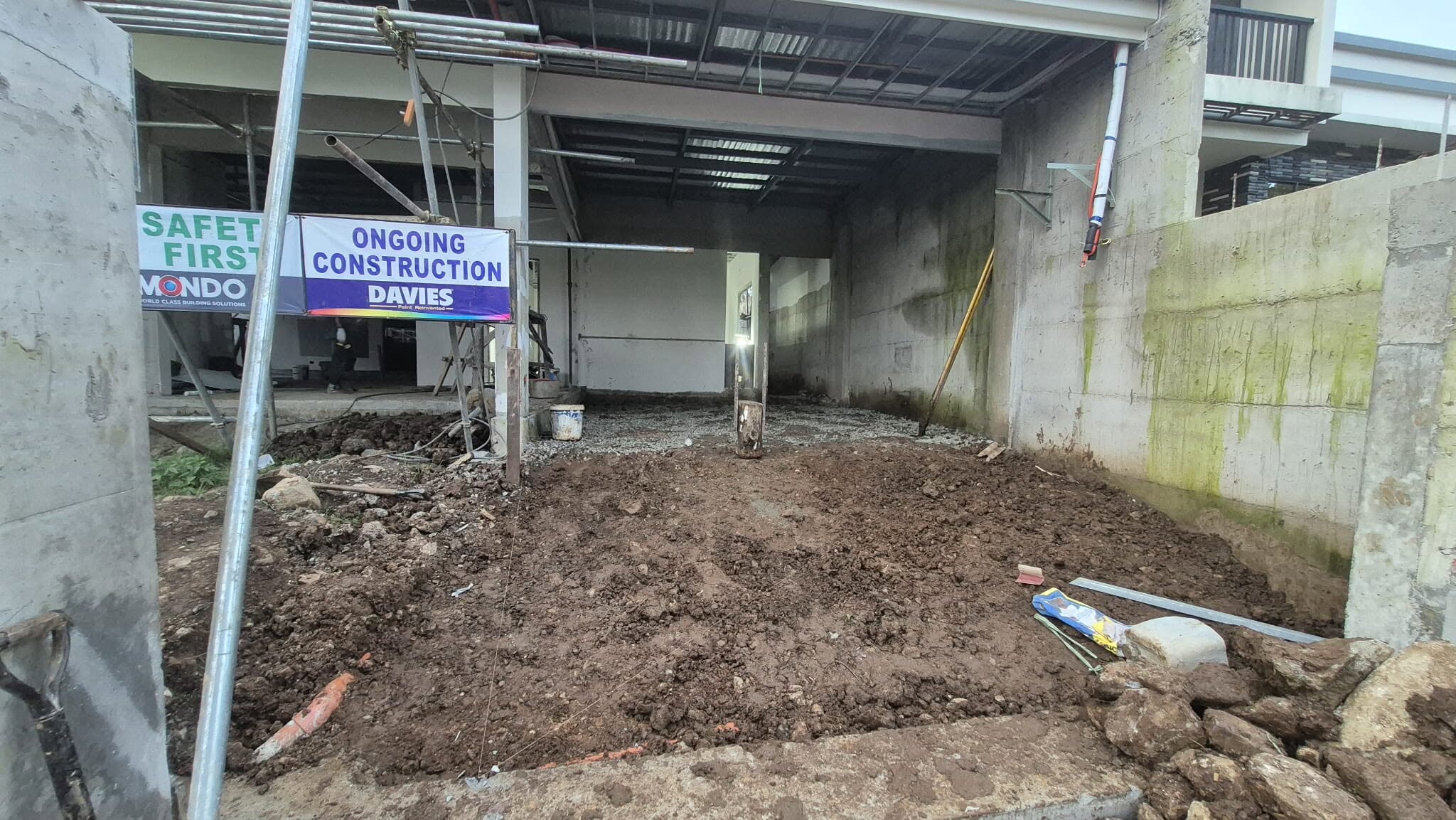
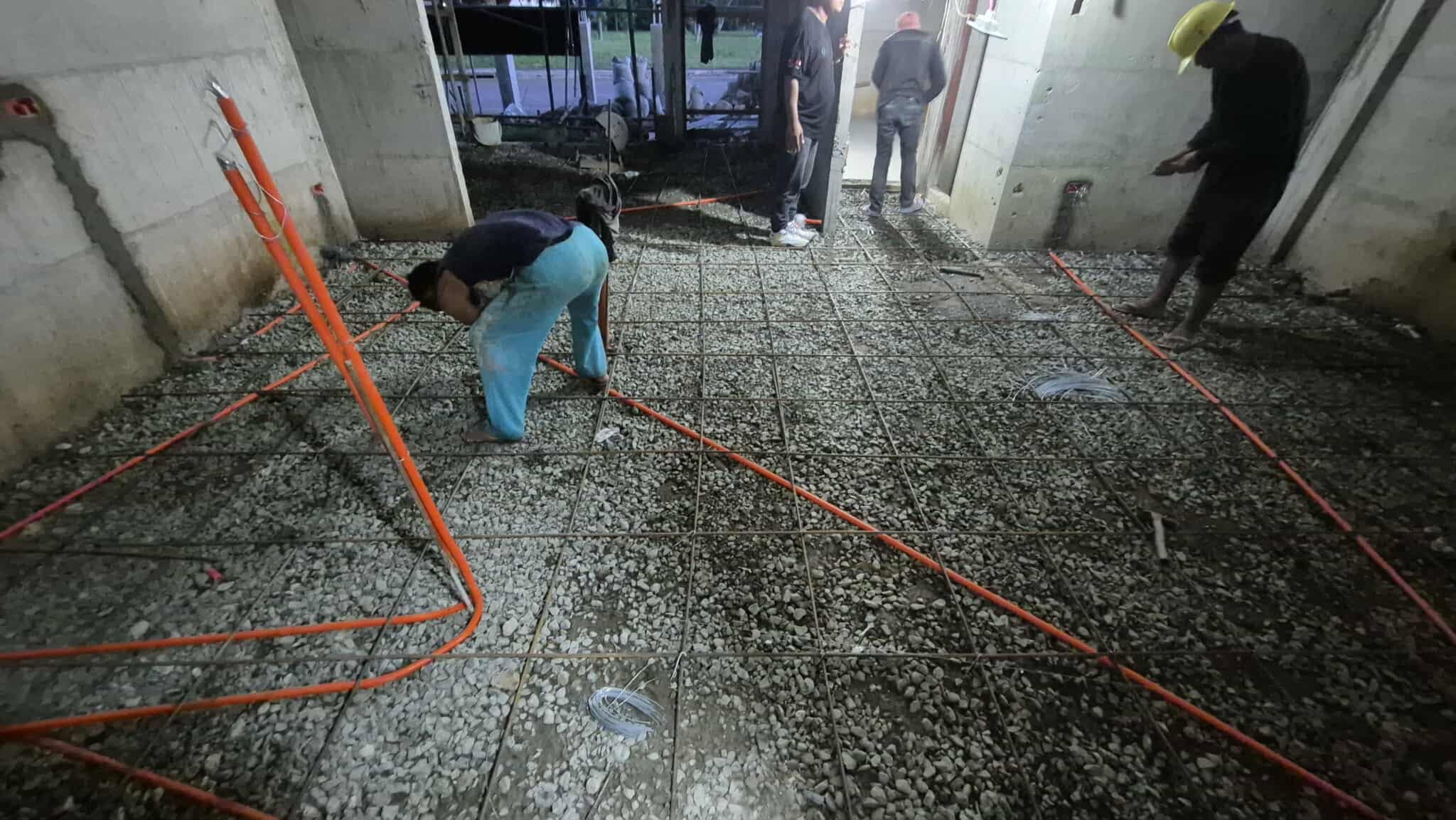
Before slab placement, the subgrade was compacted and reinforcement installed. Soil poisoning was applied as a preventive termite-control measure prior to concreting, with the treatment treated as one layer of protection rather than a substitute for future professional pest management.
Plumbing & Embedded Services
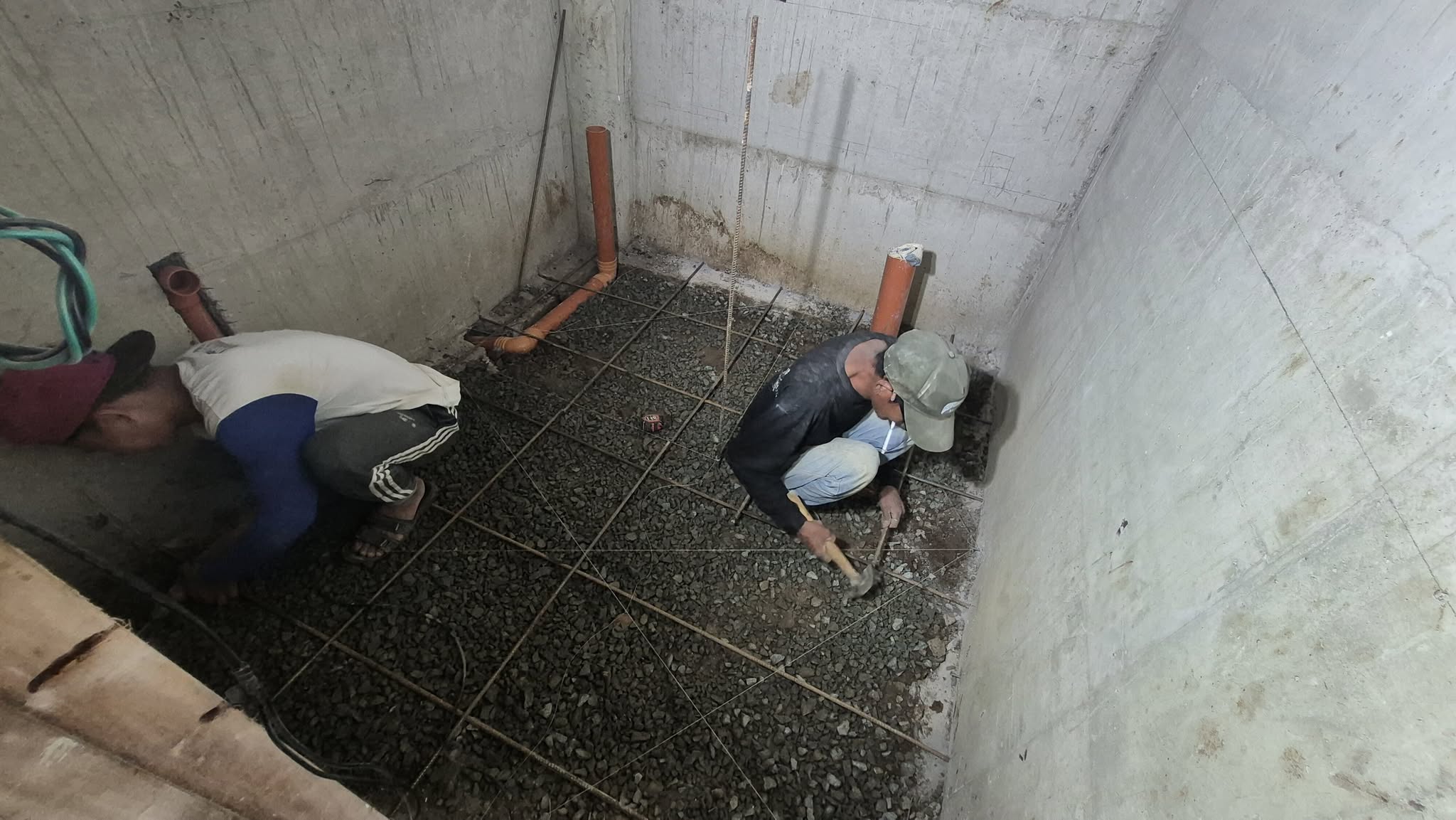
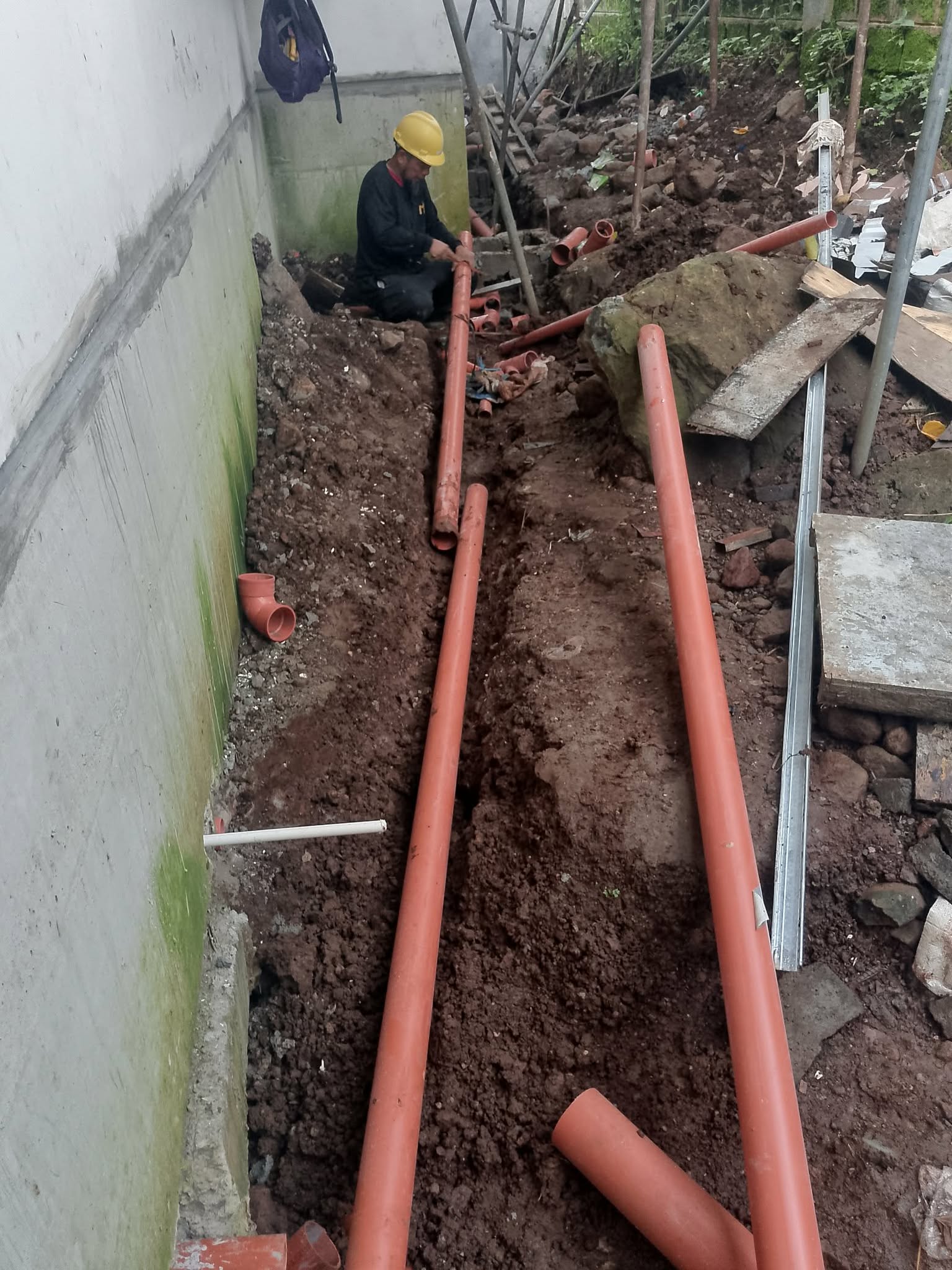
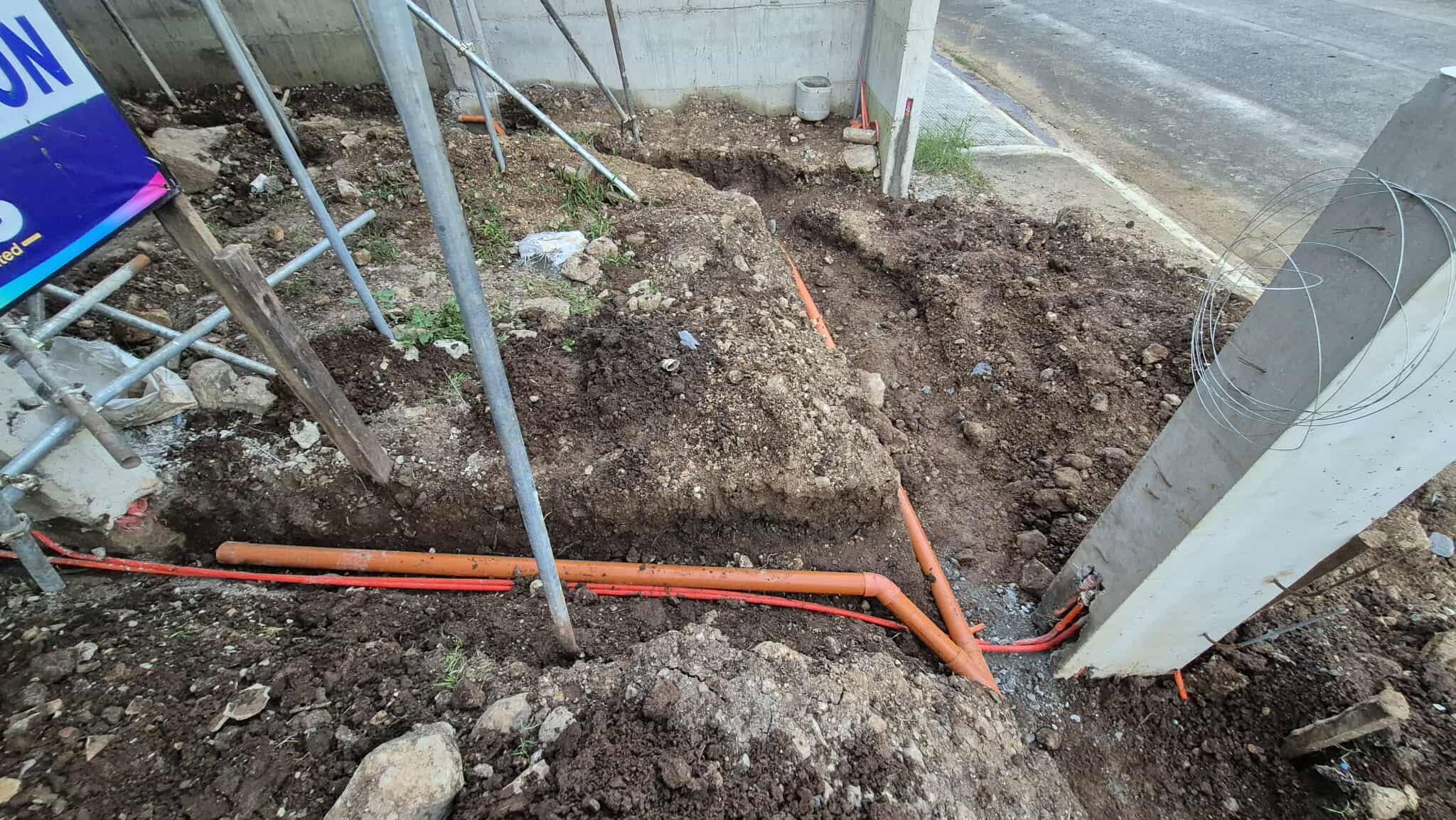
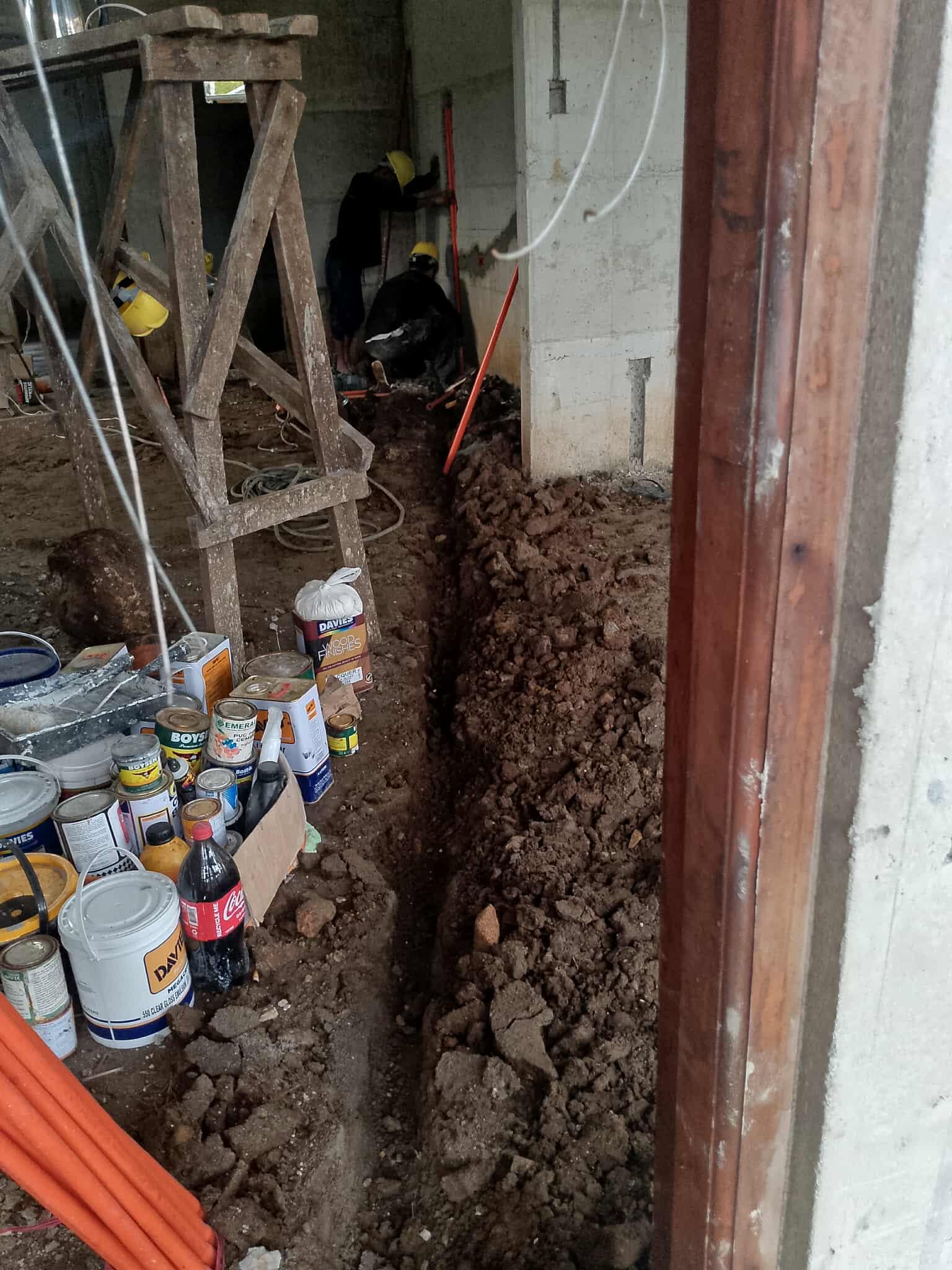
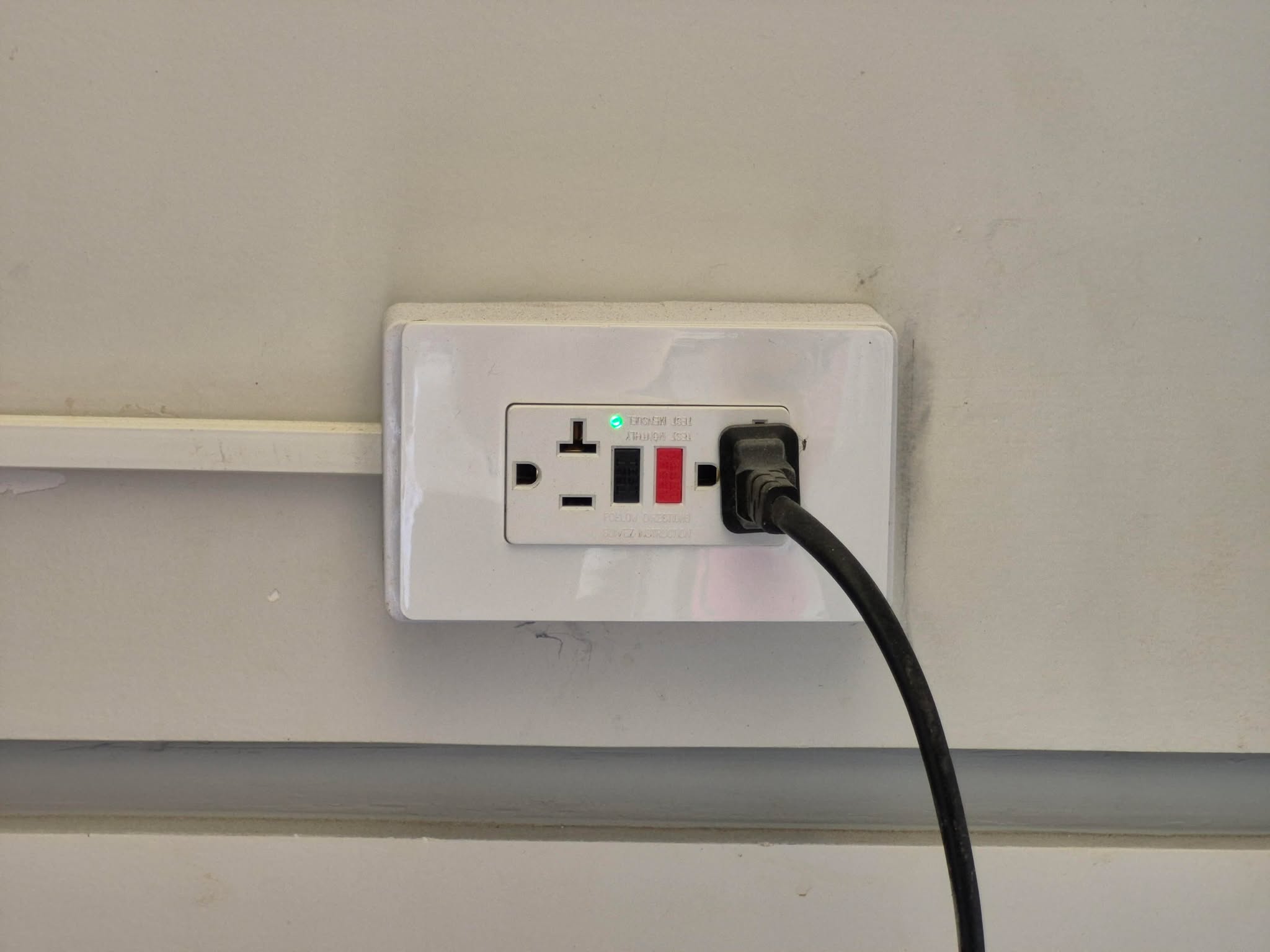
Plumbing lines used 1000-series piping as specified for the project. Electrical and plumbing rough-ins were coordinated and checked before slab concreting so embedded services would not require avoidable cutting or rework later.
Finishing & Multi-Trade Coordination
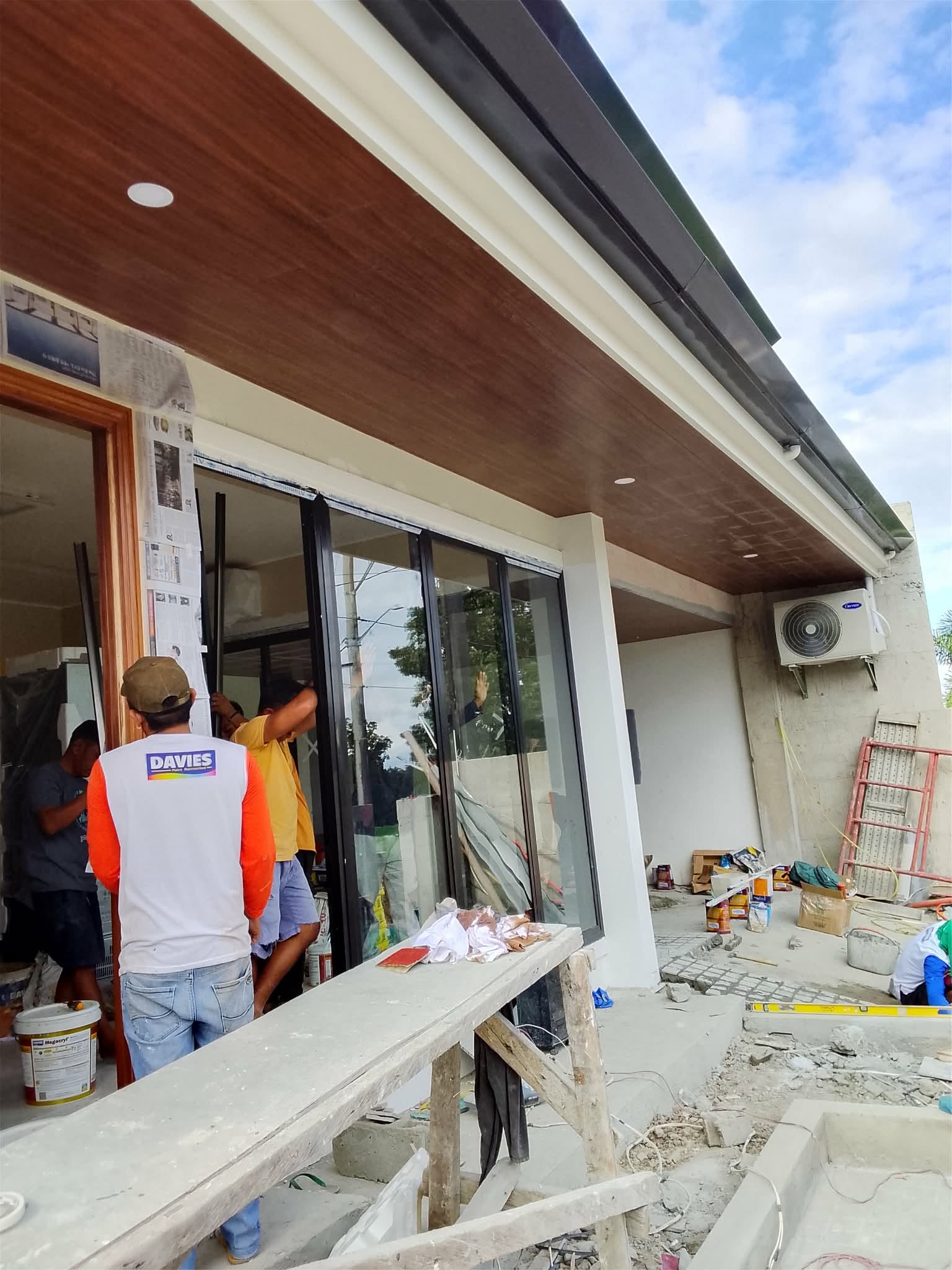
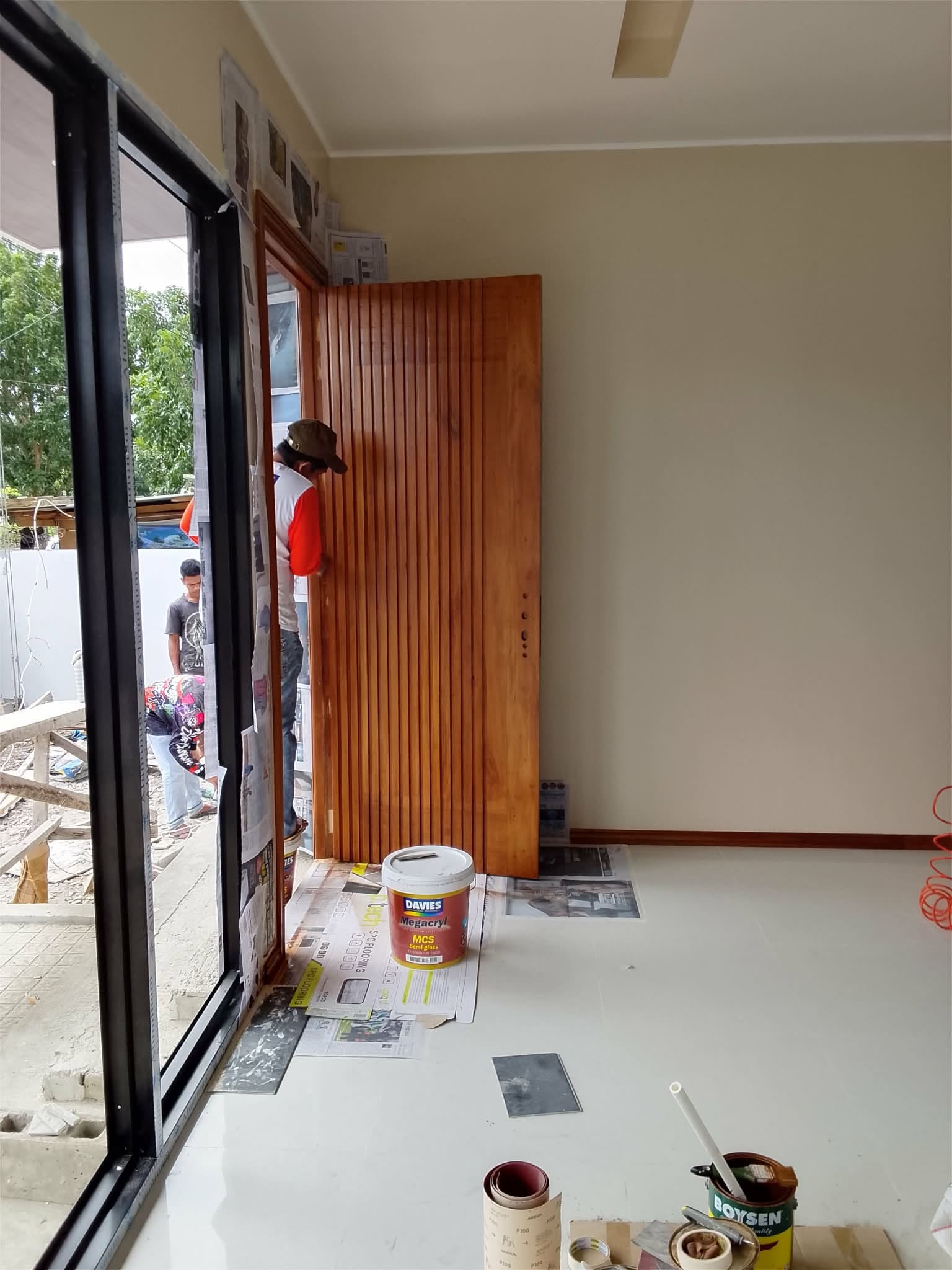
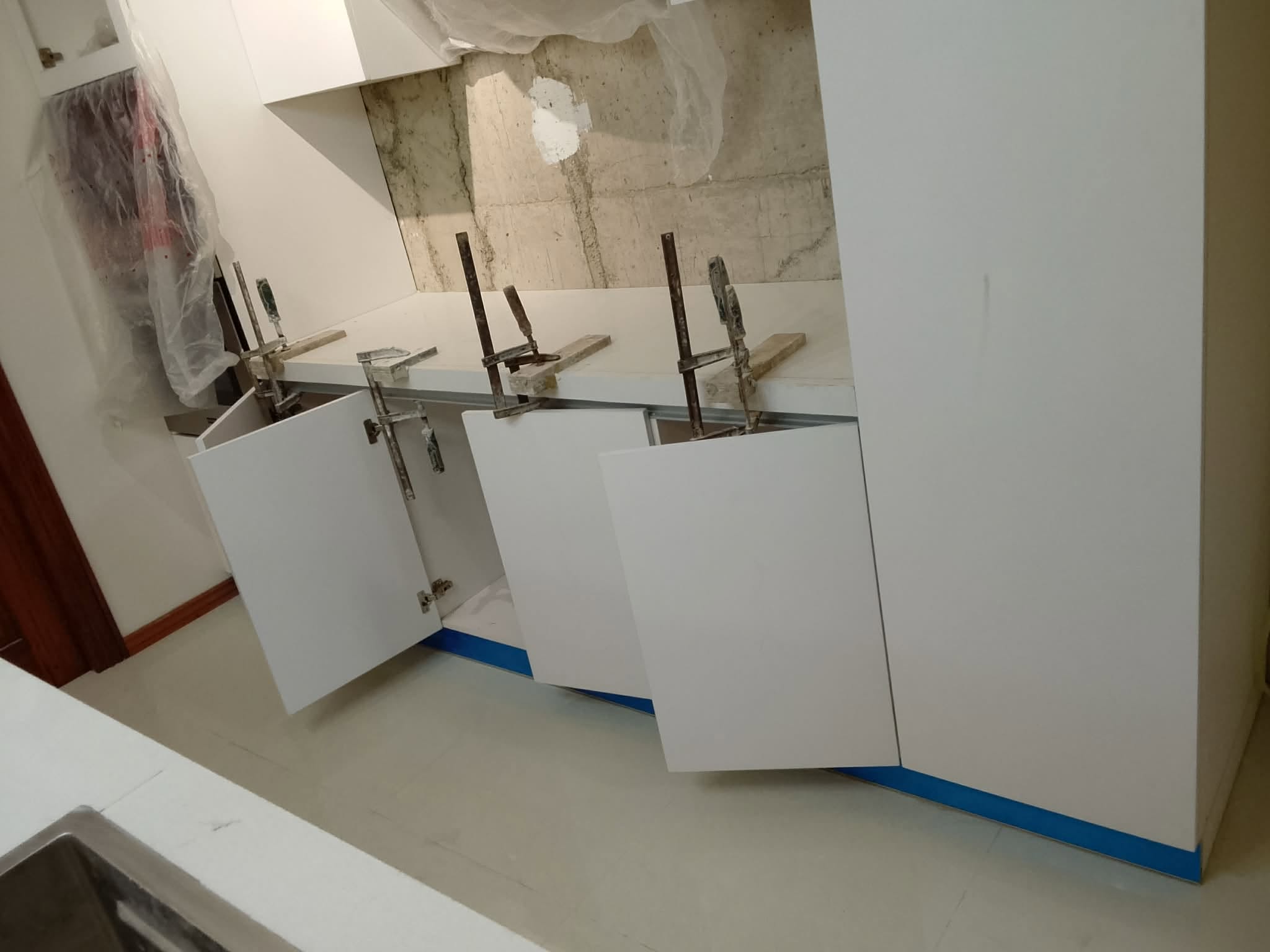
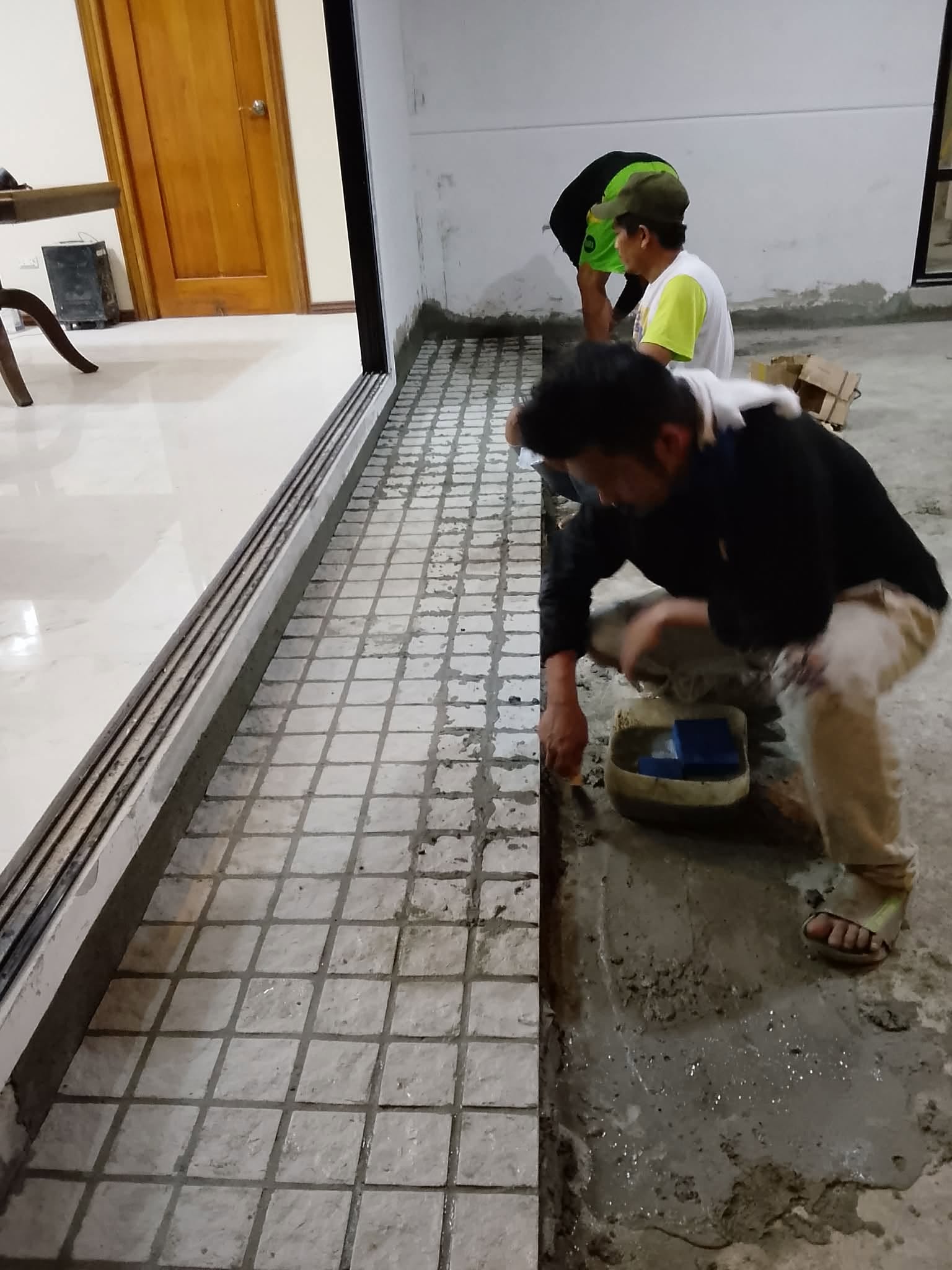
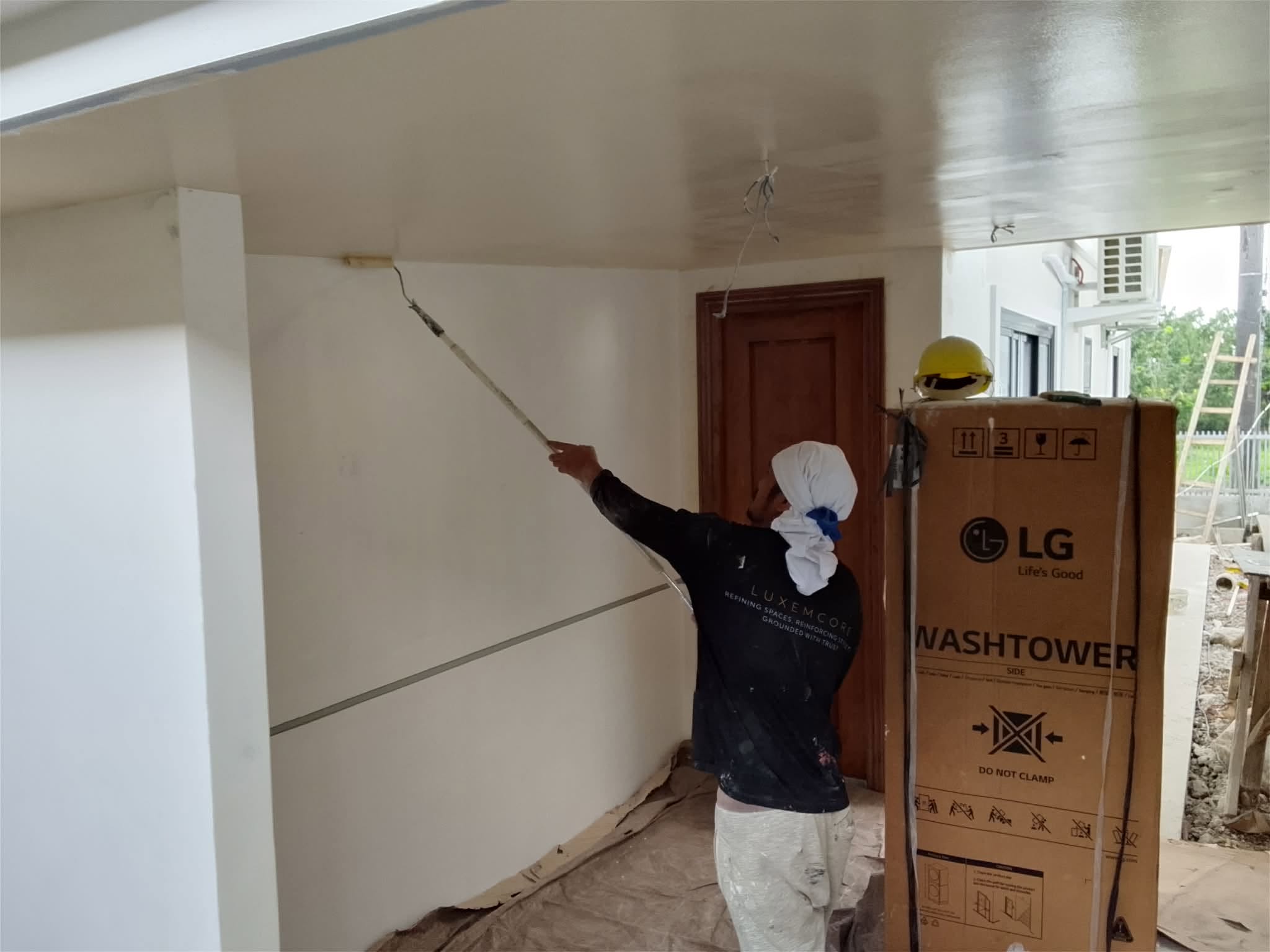
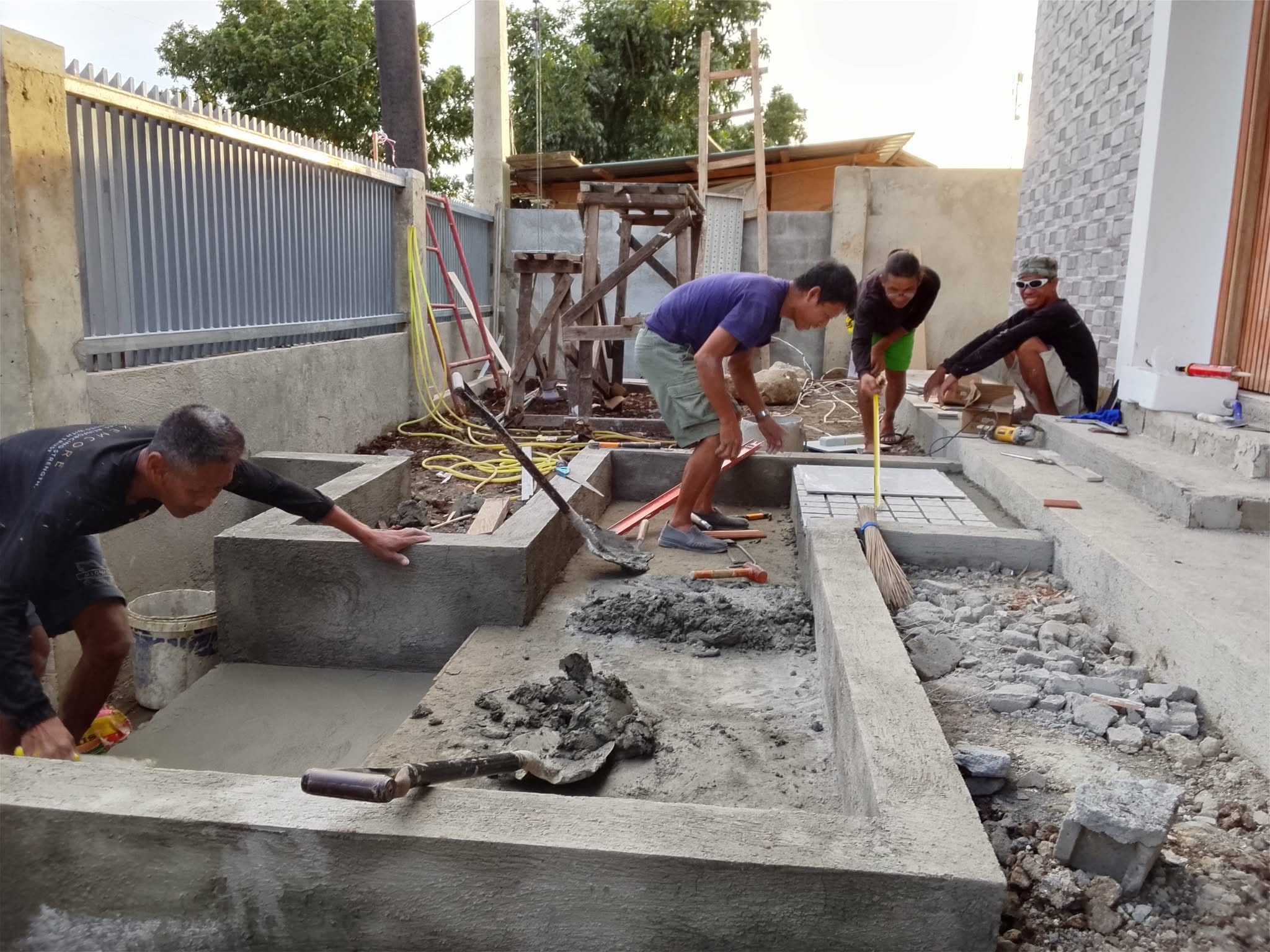
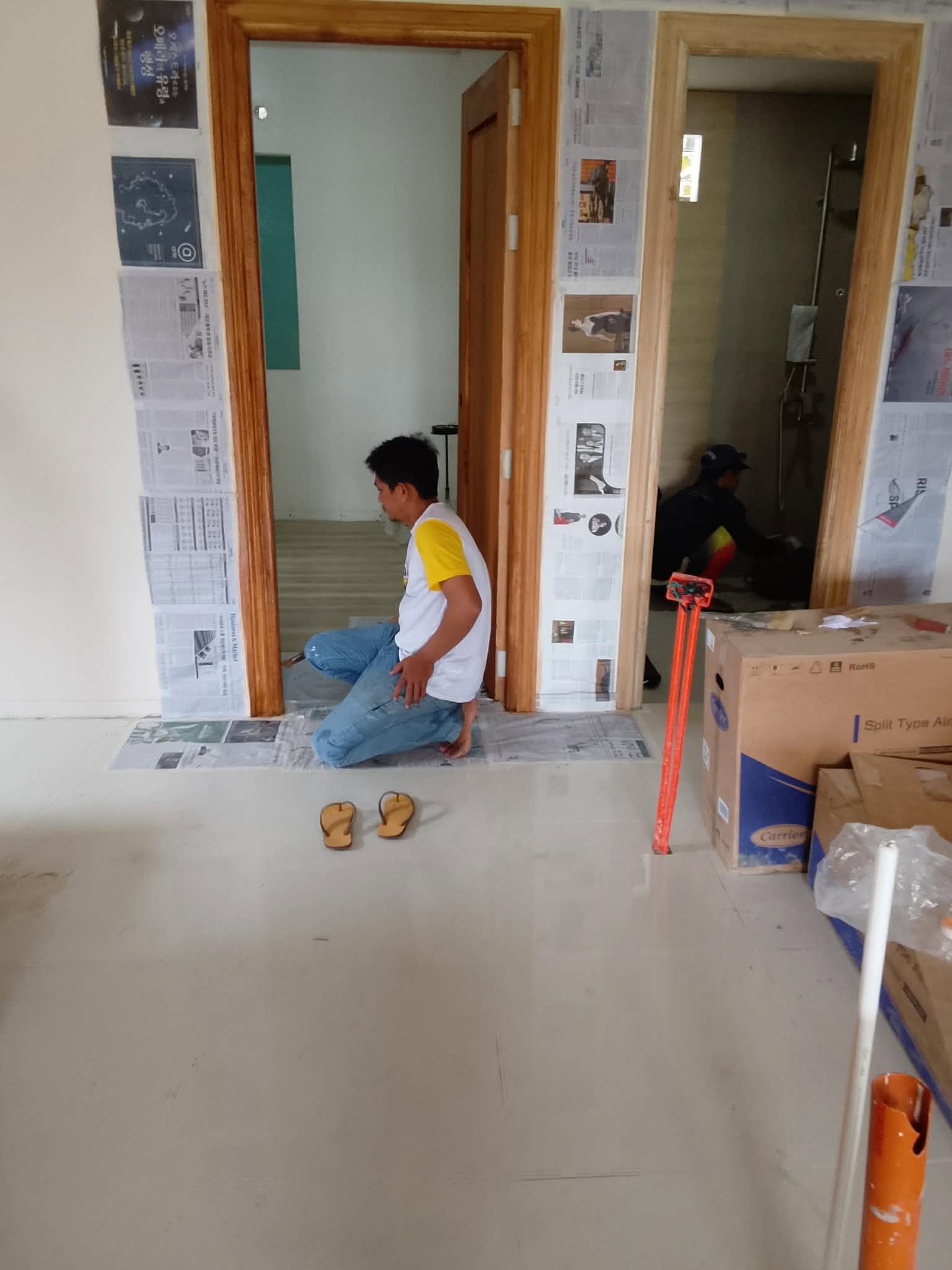
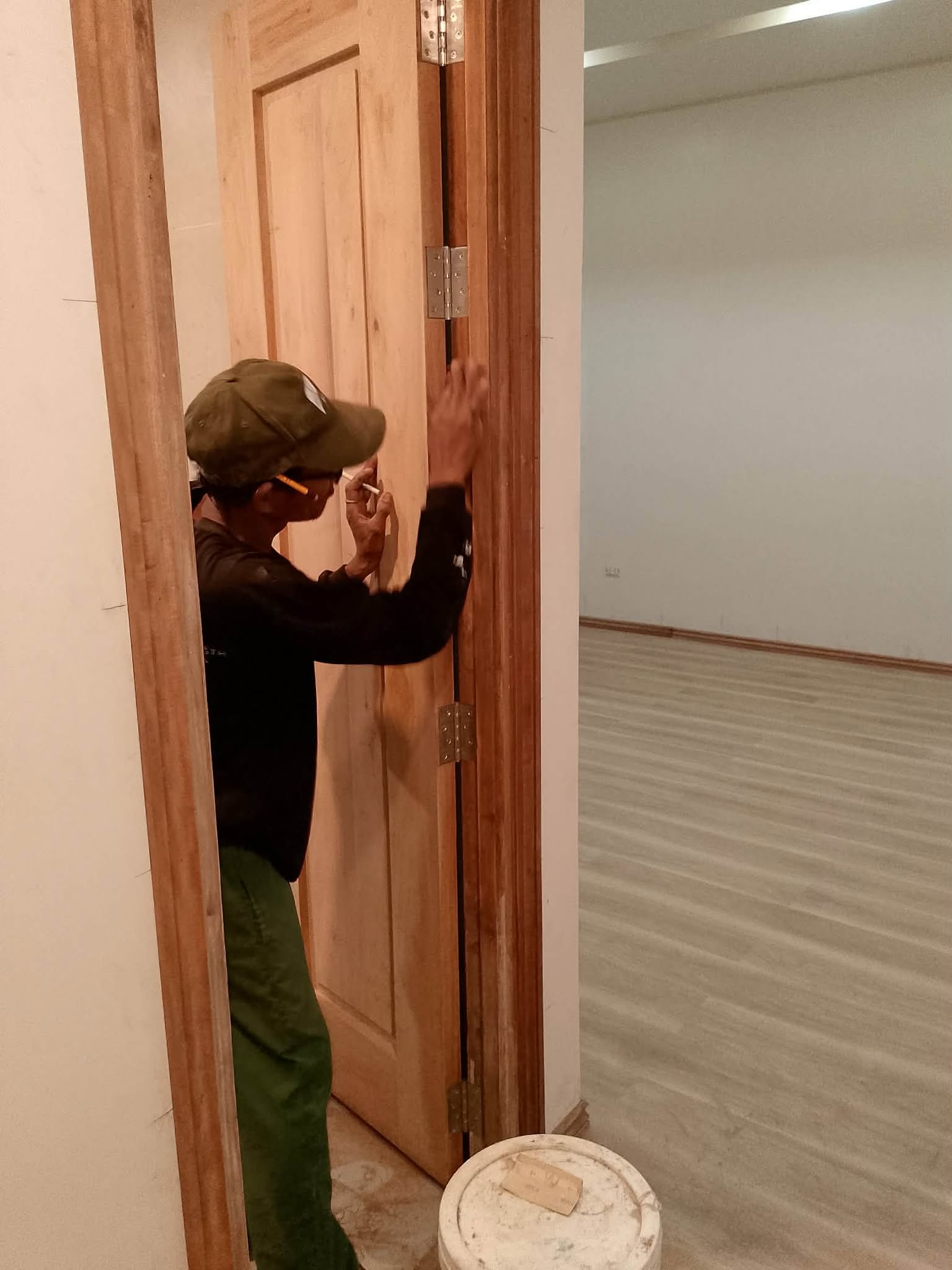
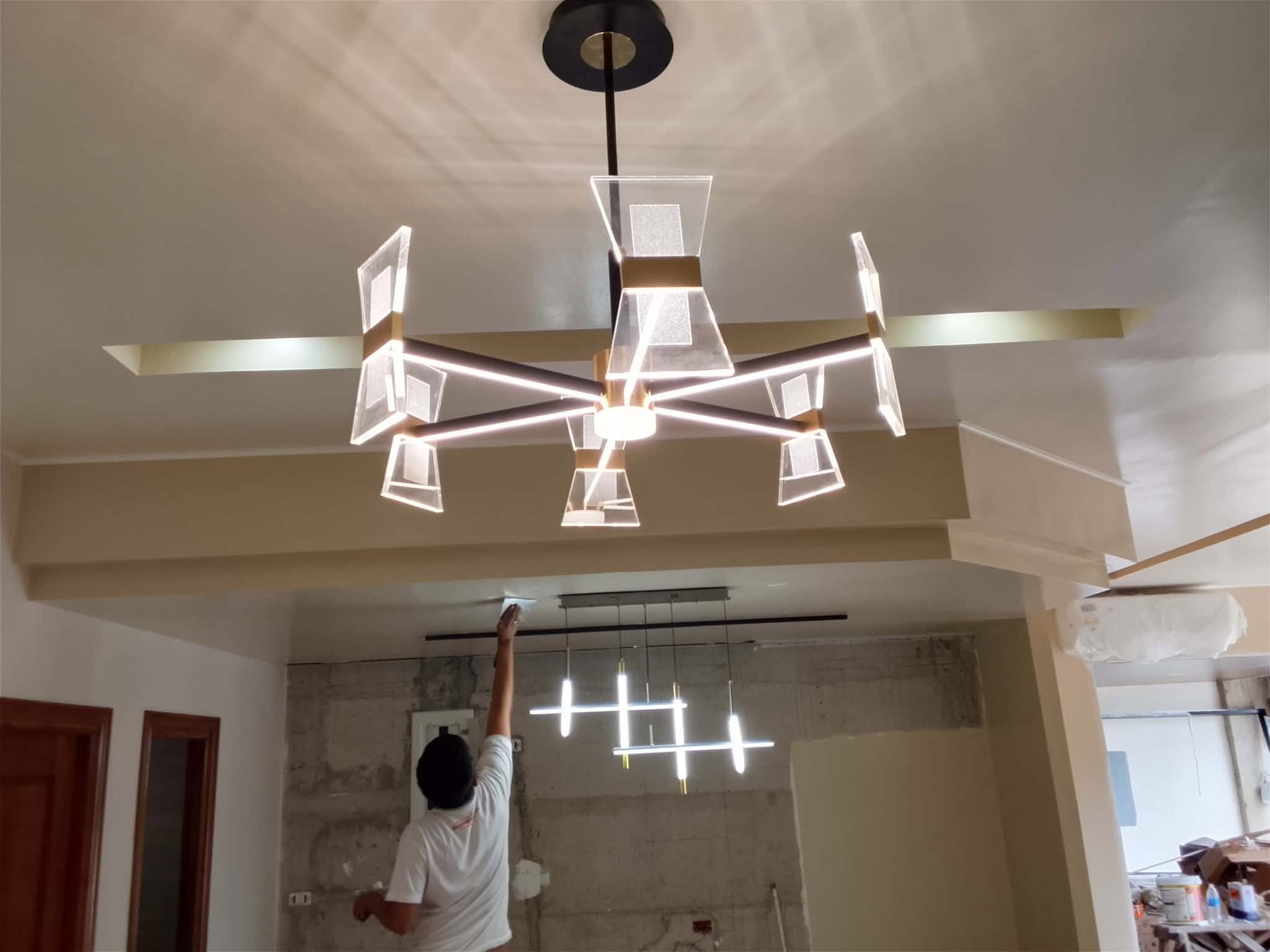
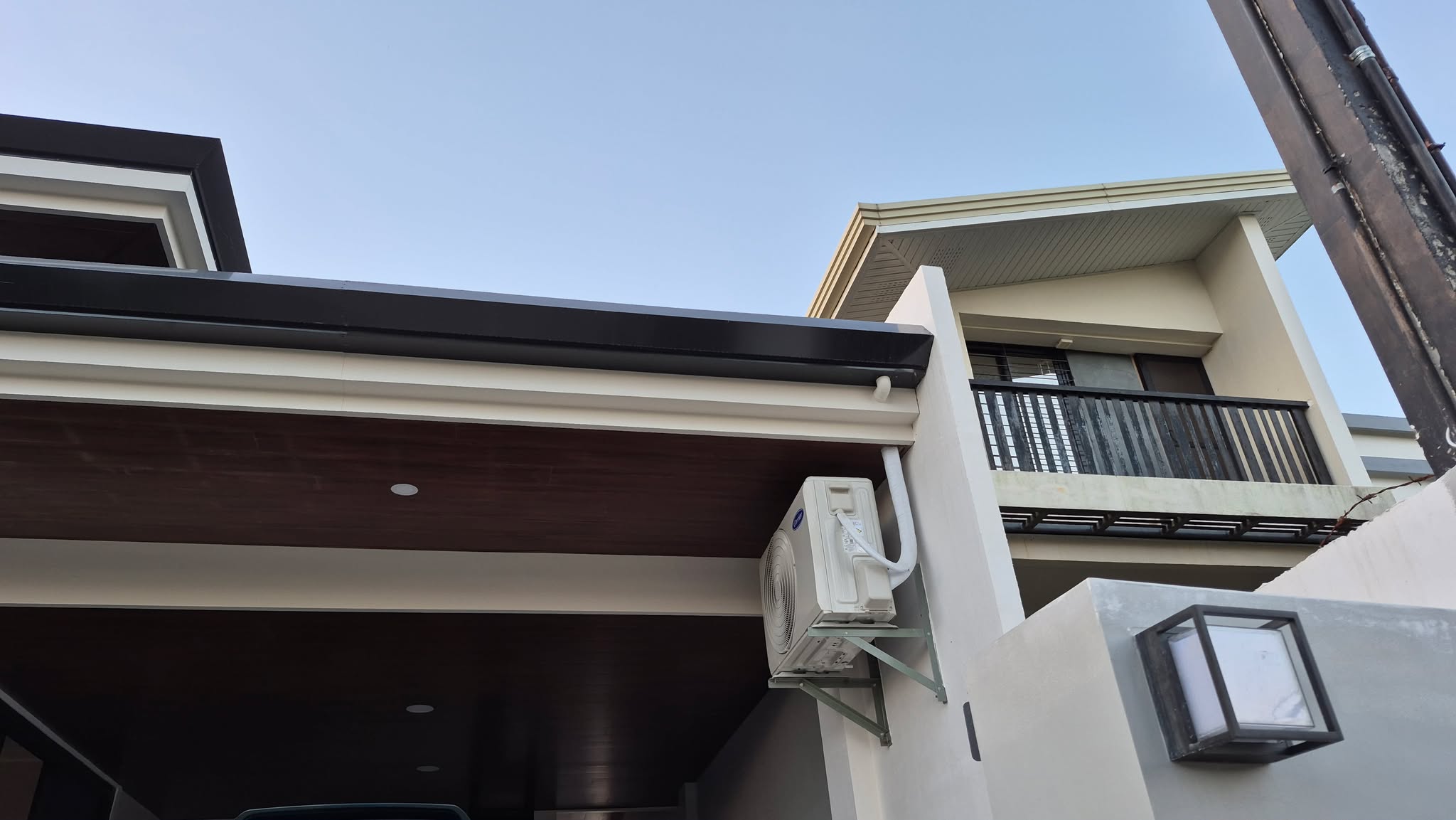
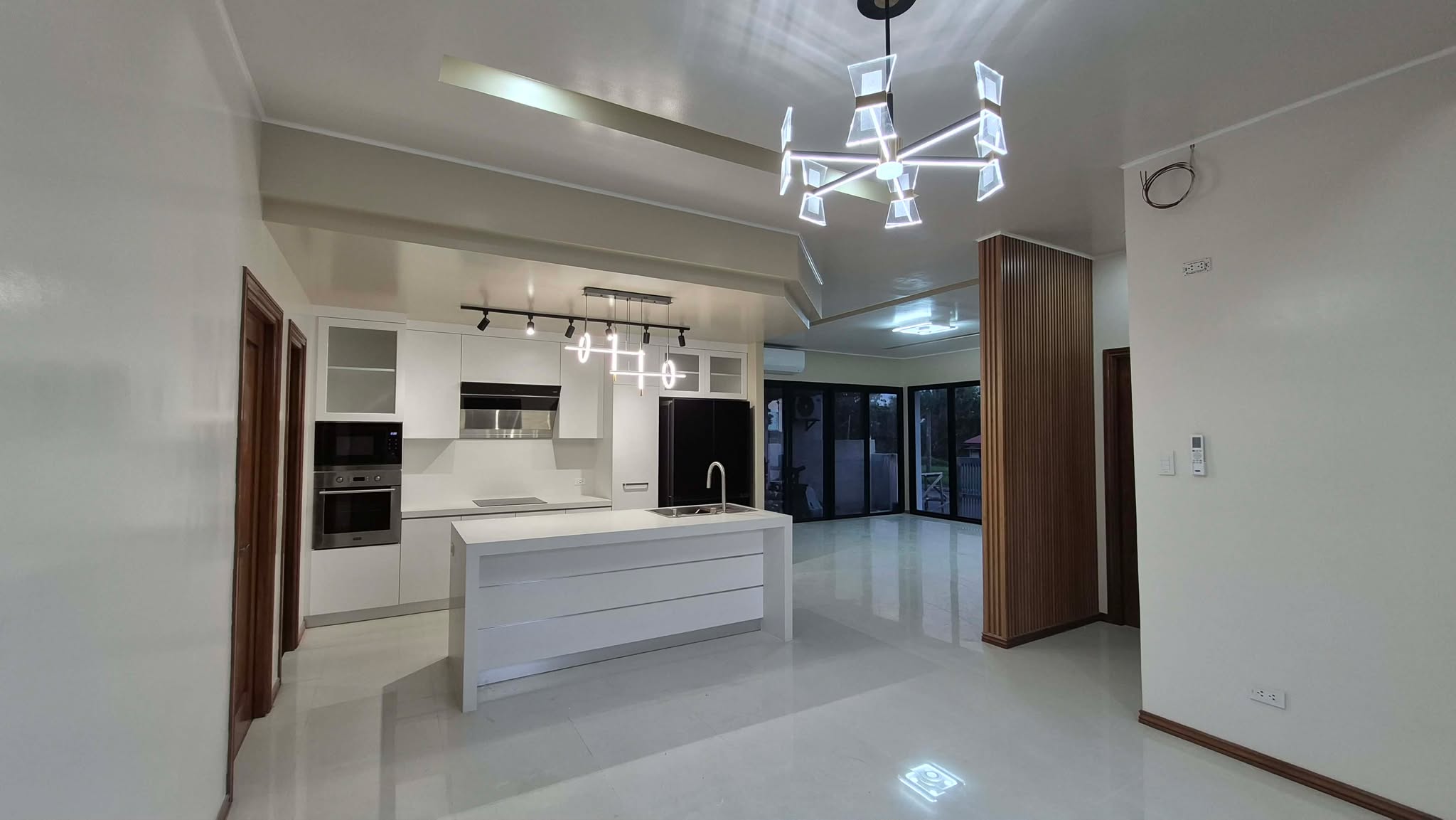
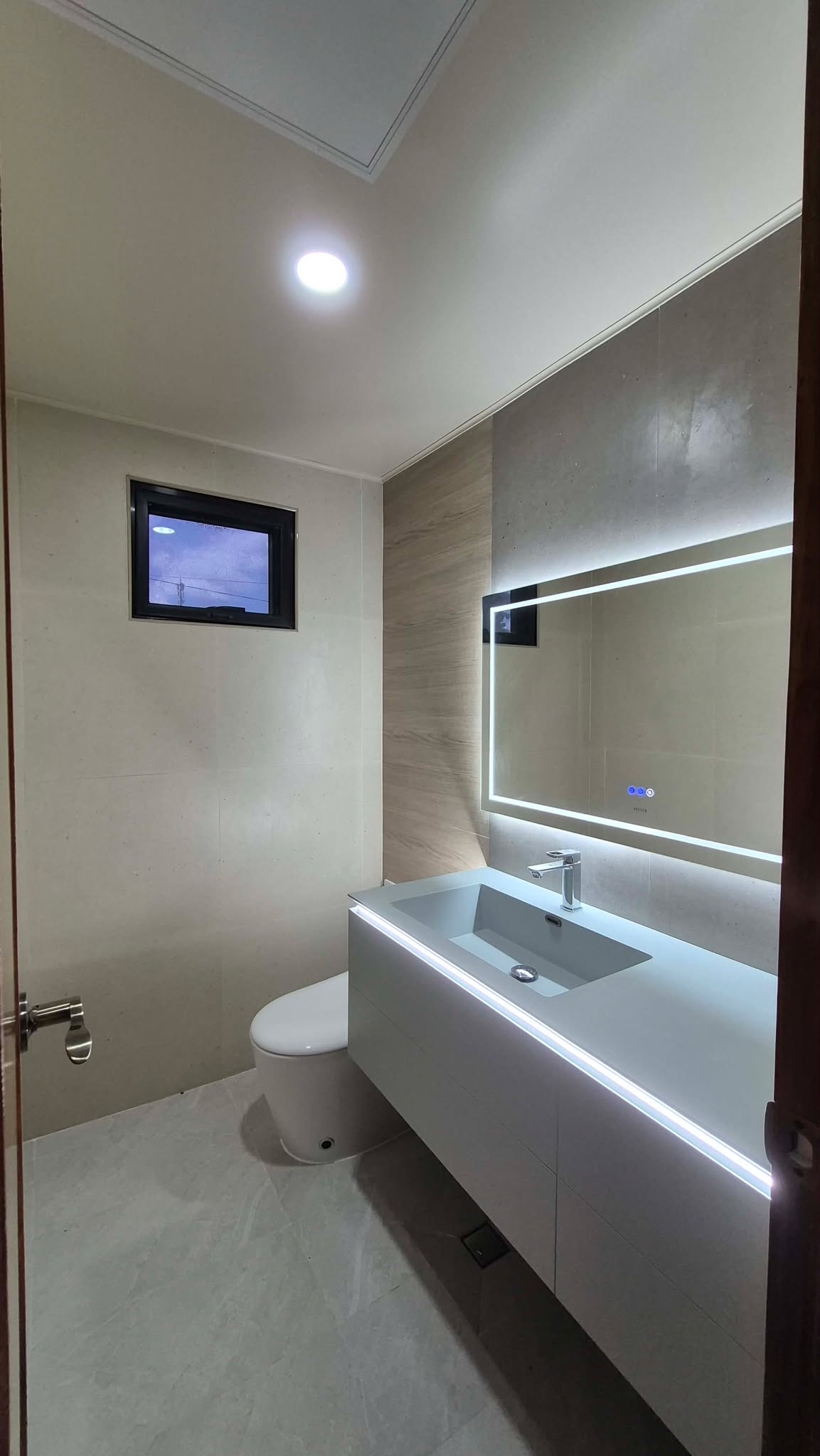
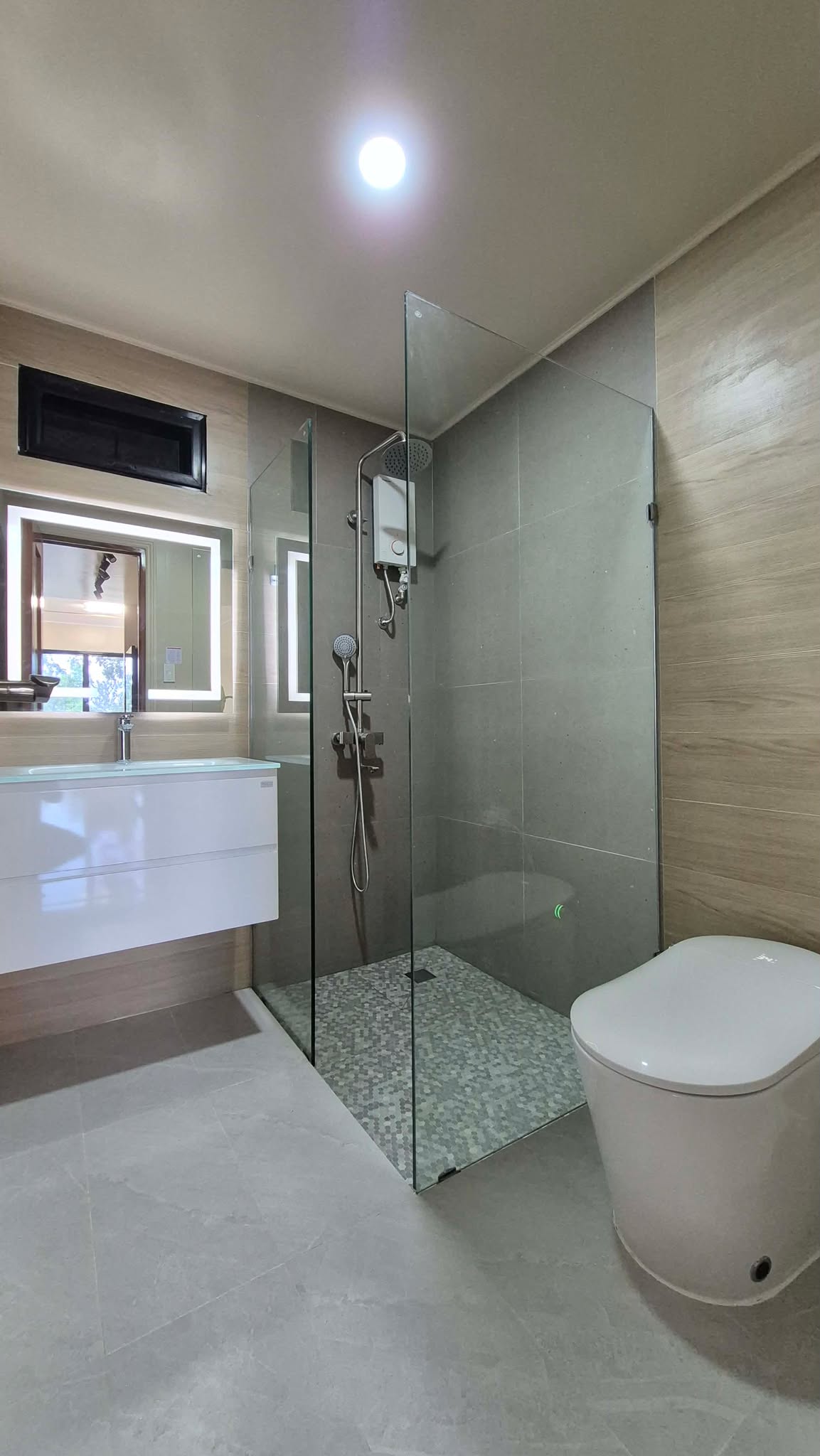
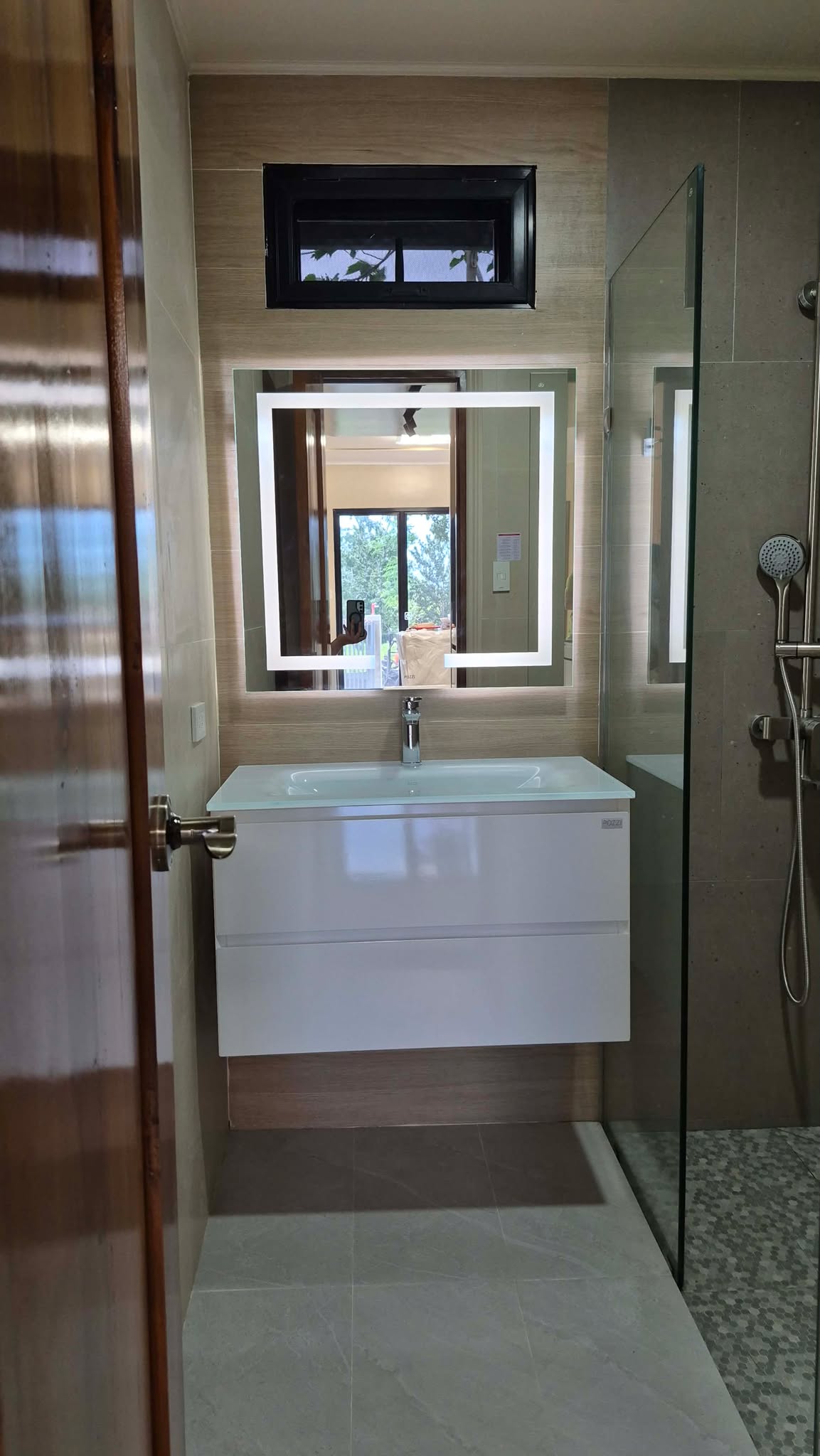
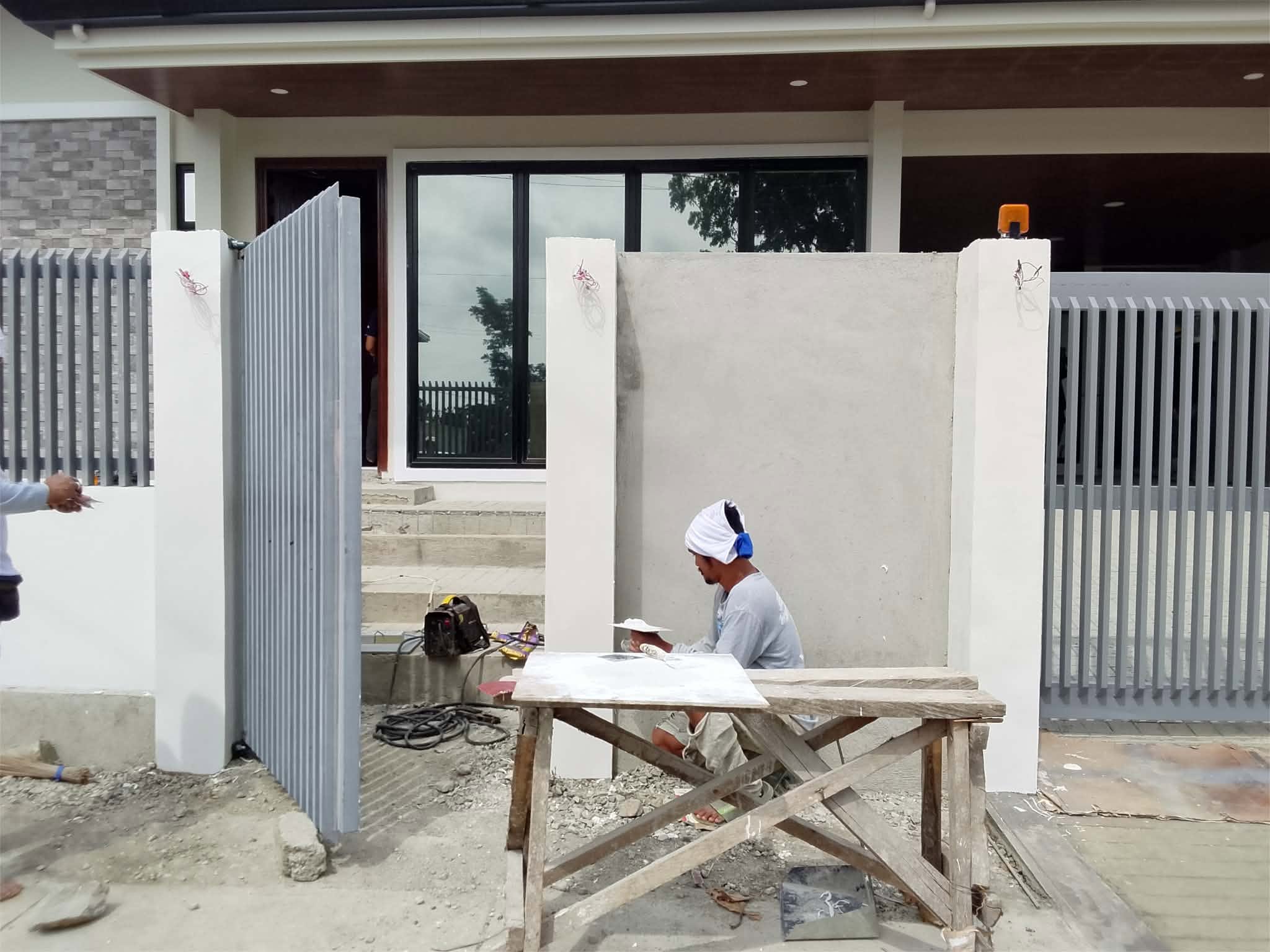
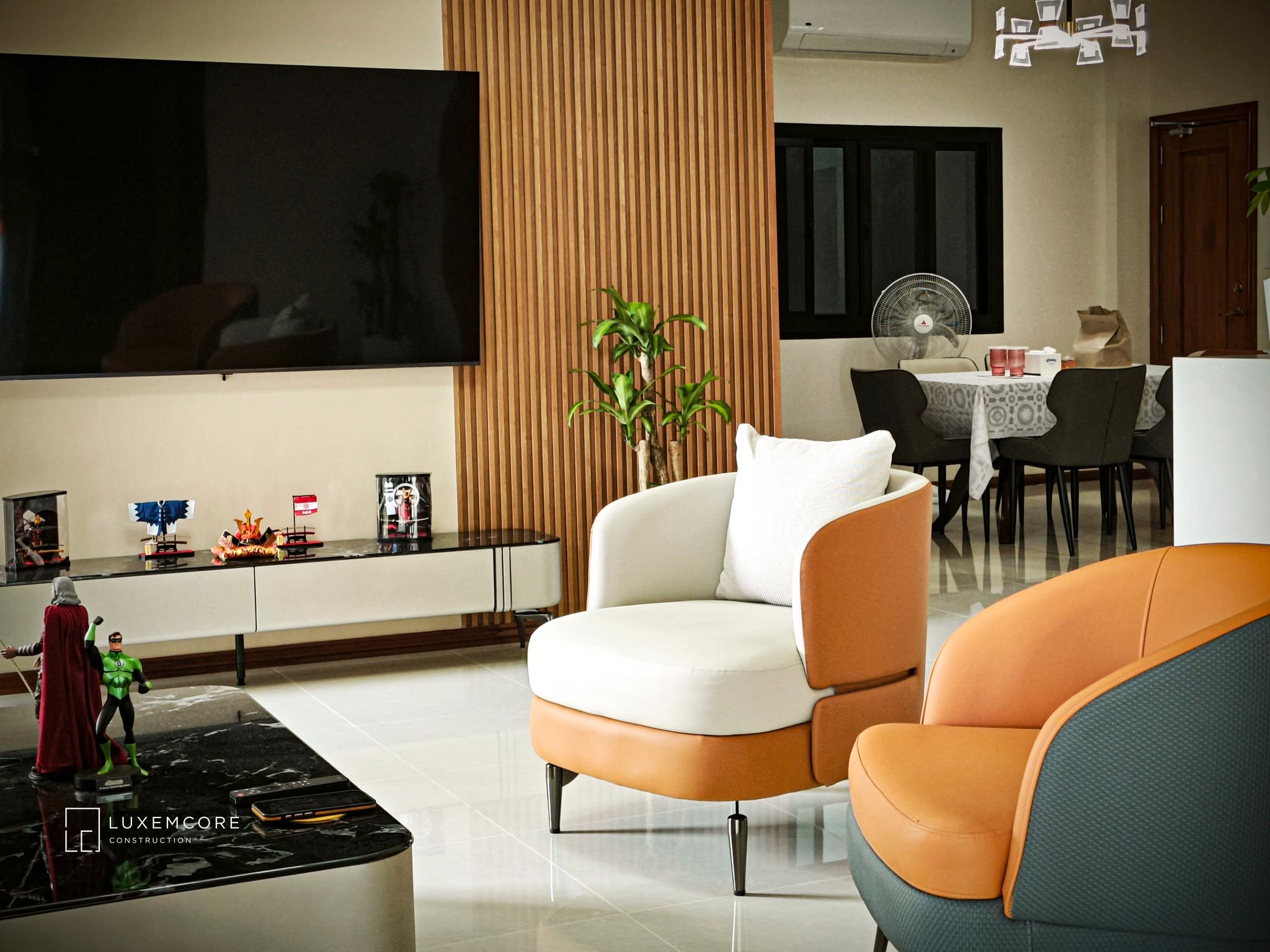
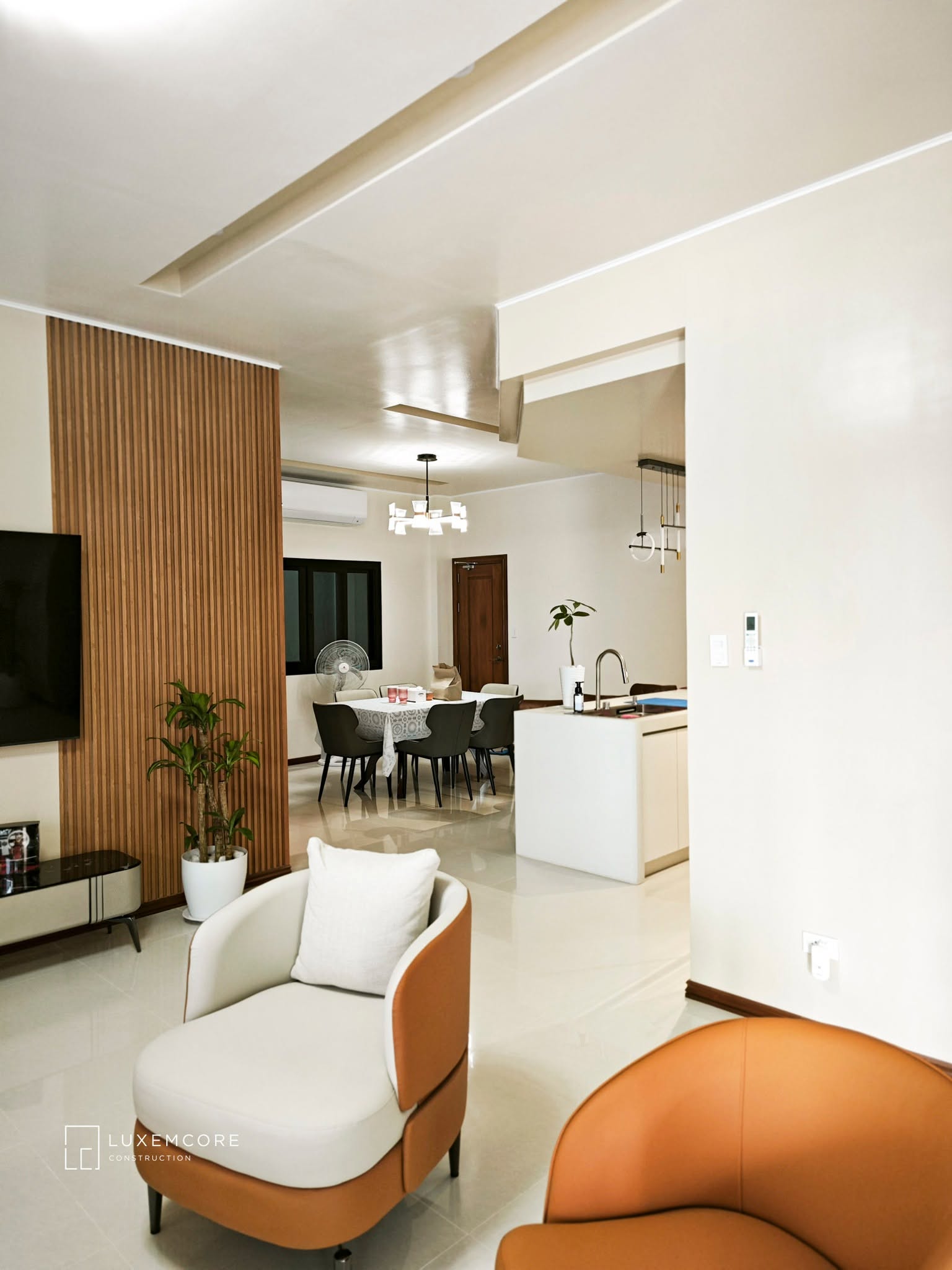
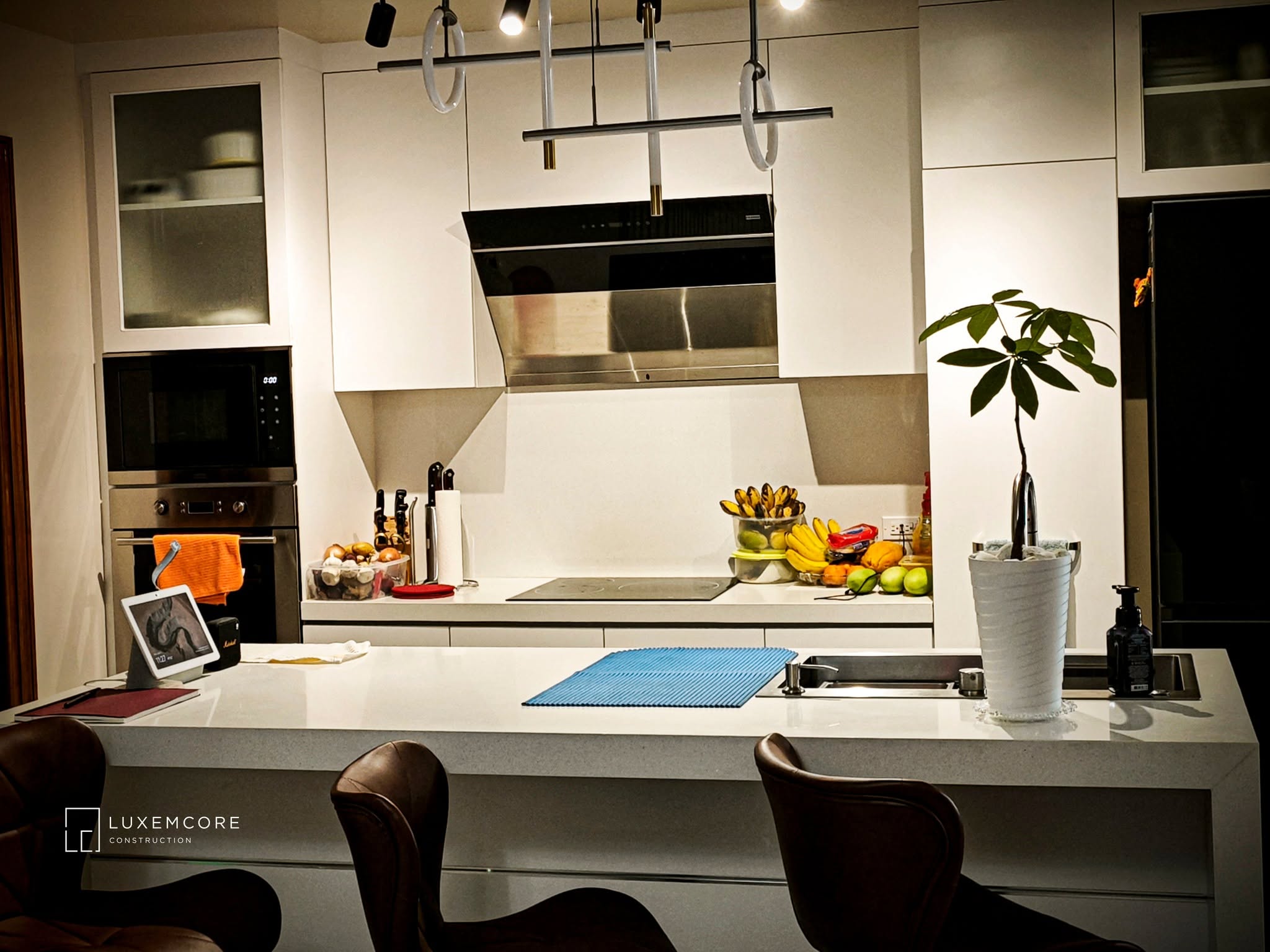
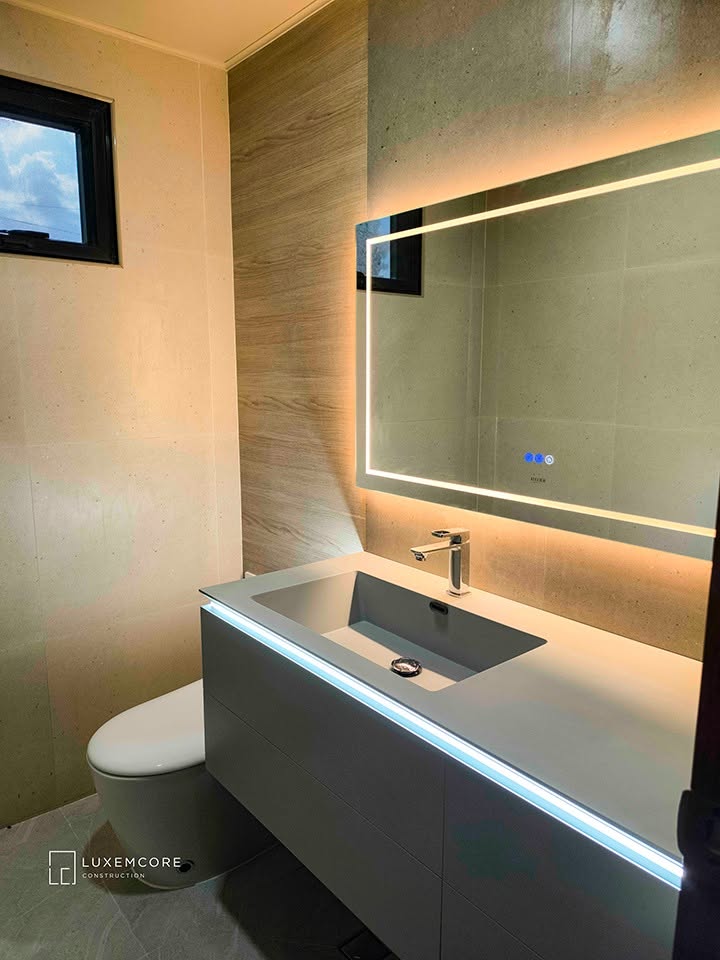
The finishing phase brought multiple trades together: ceiling works, air-conditioning provisions and rough-ins, tiling, painting, doors and windows, electrical works, and related details. At this stage, sequencing and interface control were as important as individual workmanship.
Punch Listing & Quality Control
Before turnover, the team performed punch listing, rectification and retouching. The objective was to close visible and functional deficiencies before client acceptance rather than treating turnover as the end of quality control.
External Works & Site Completion
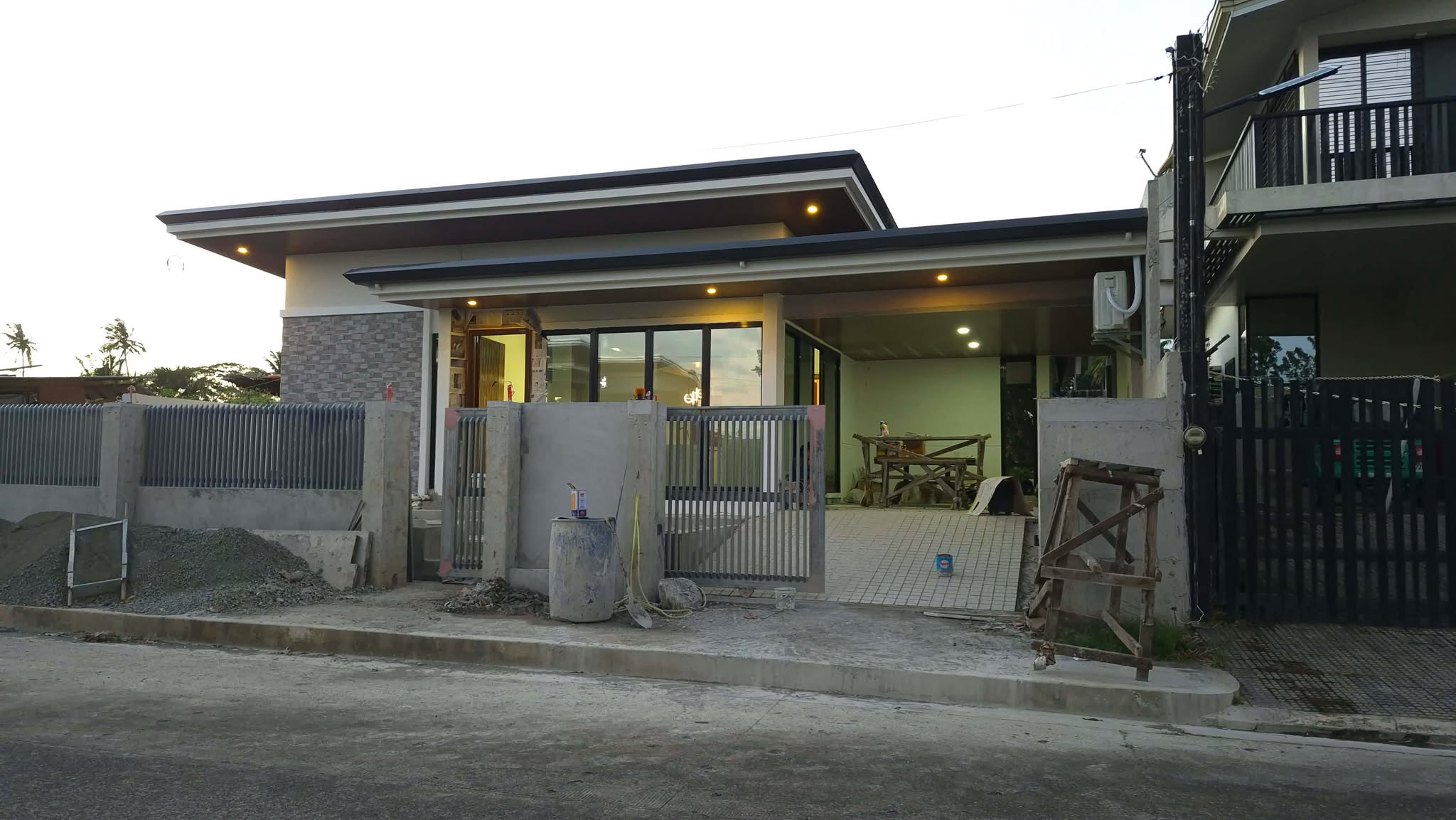
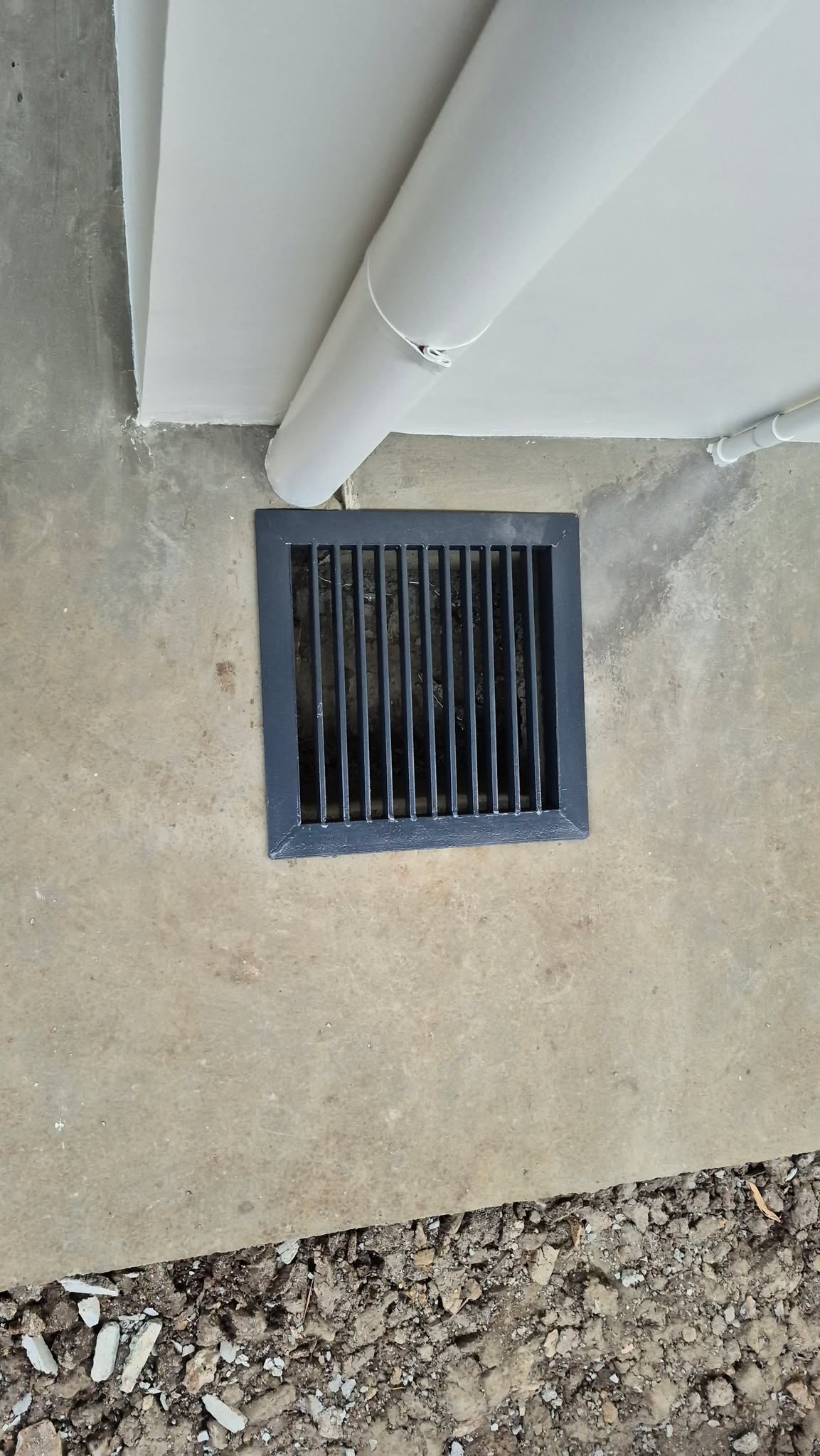
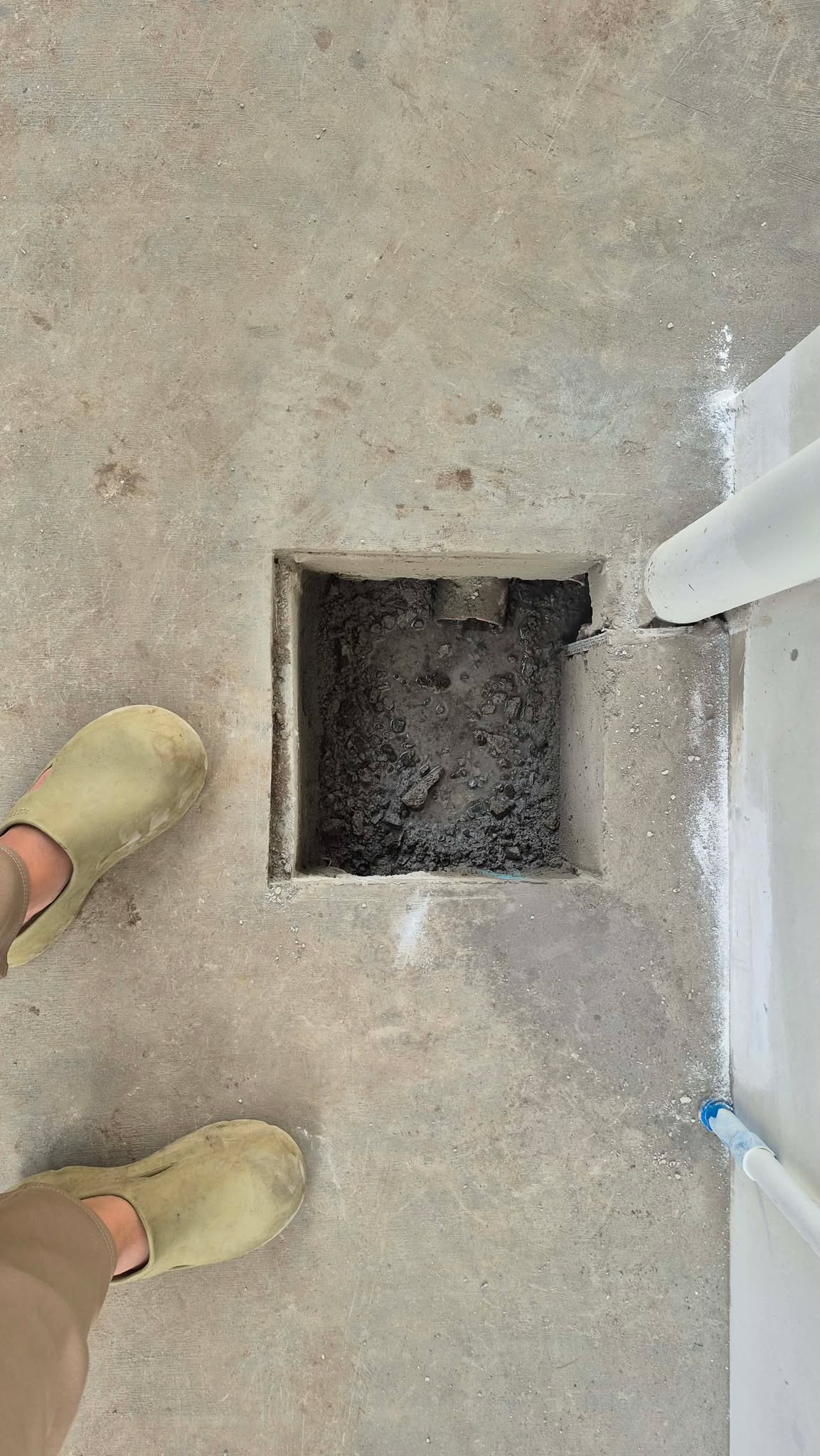
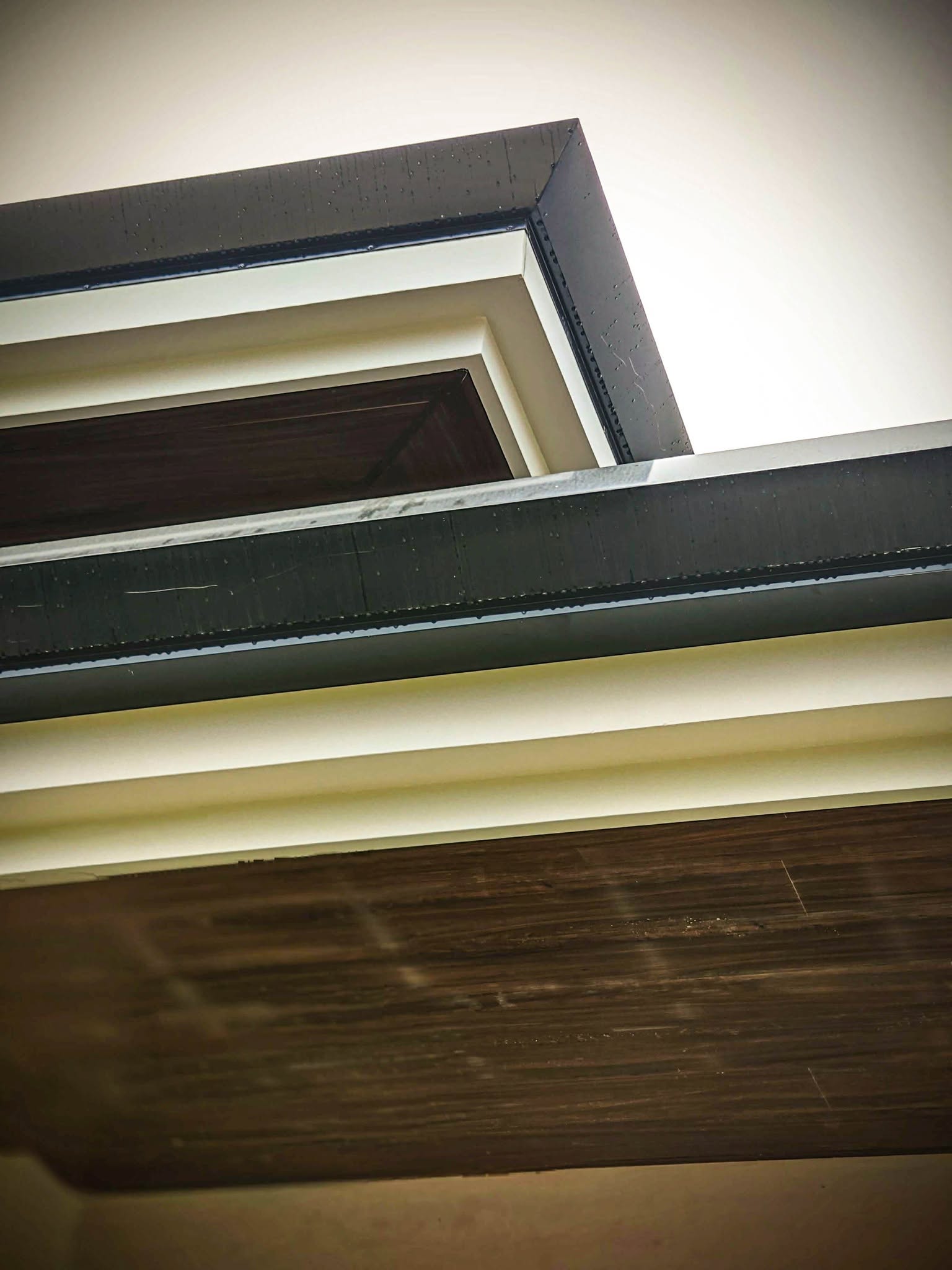
Final external works included rear fence-wall rectification, perimeter works, hardscape and catch-basin coordination—bringing the site infrastructure and surrounding areas to completion alongside the house.
Final Turnover
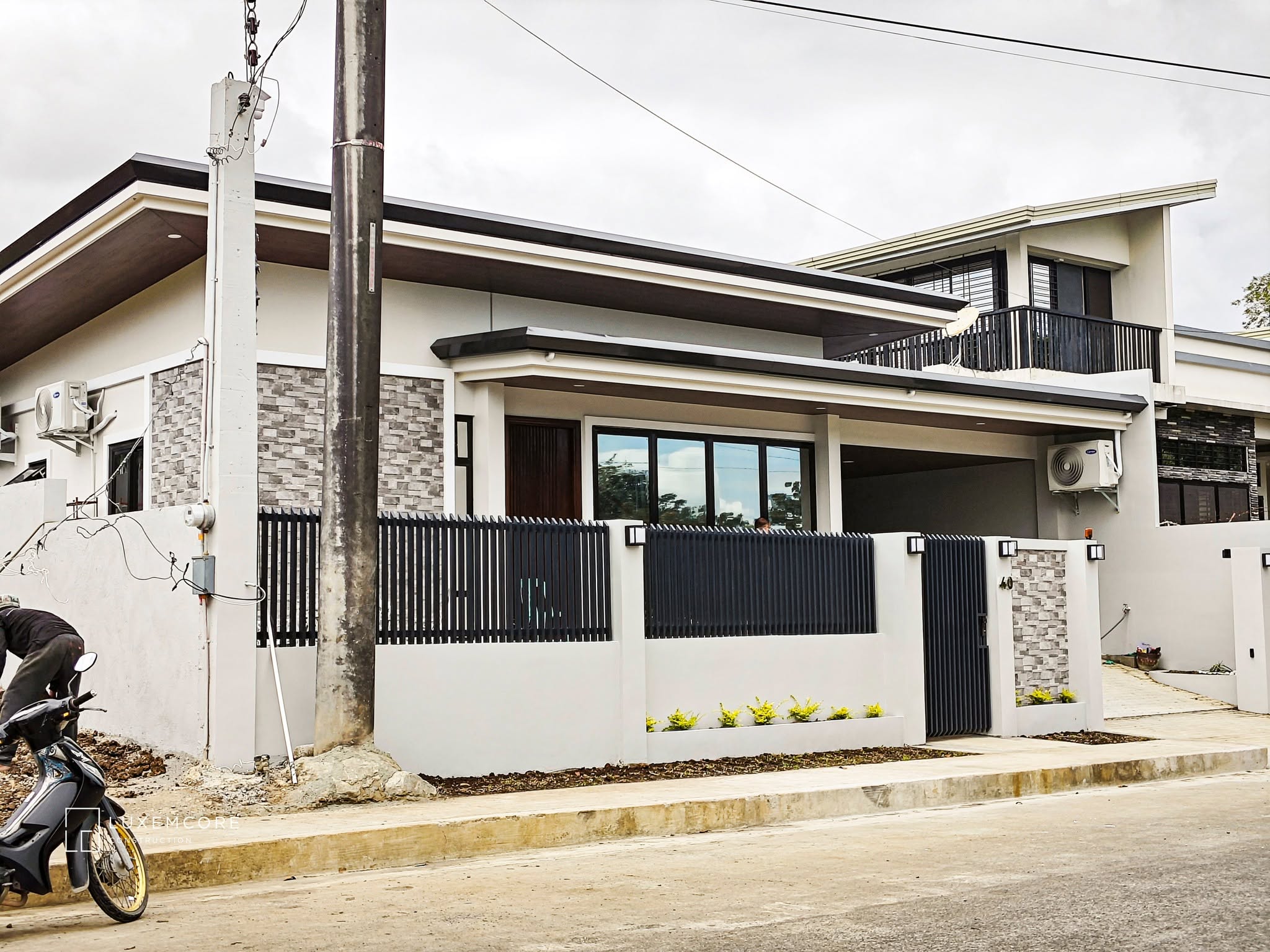
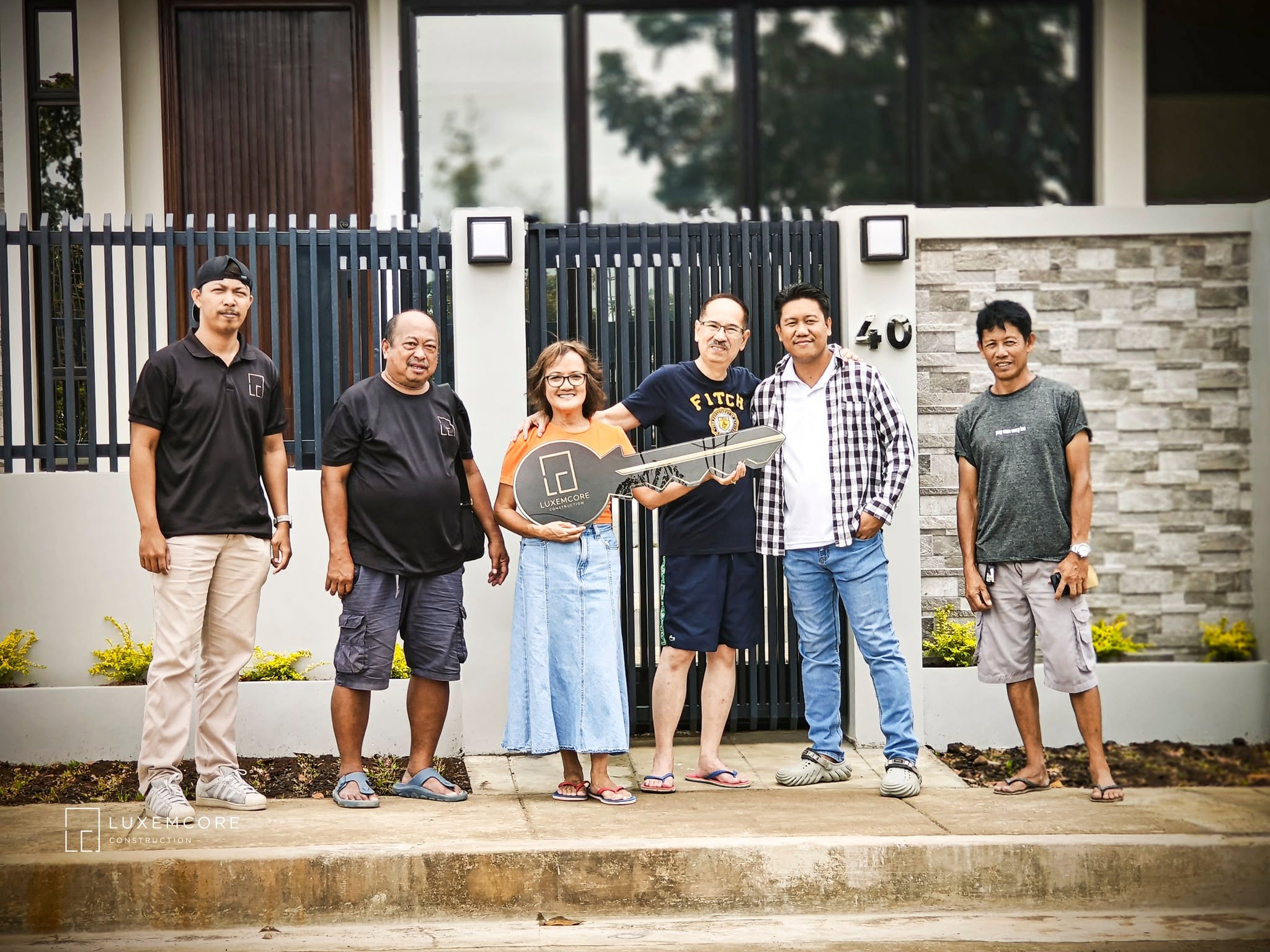
The project progressed from difficult site conditions and weather exposure to a completed residence prepared for client acceptance. The case reflects Luxemcore’s approach: identify actual site risks, coordinate the technical response, document execution, and carry quality control through final turnover.
Project Outcome
Capacity is demonstrated in how problems are managed before they become compromises.
The value of this project is not only in the completed residence, but in the decisions made through excavation, structure, weather exposure, embedded services, finishes and final rectification.