
Luxemcore Insights • Cost & Budget
House Construction Cost in the Philippines: A Practical Guide
Homeowners often start with a simple Google question: “How much does it cost to build a house in the Philippines?” The useful answer is not one national number—it is a range that becomes more accurate as the project information improves.
House construction cost in the Philippines depends on floor area, finish level, structural system, site conditions, location, material choices and complete scope. Use early cost ranges for planning, then move toward a detailed estimate and BOQ before contract award.
In actual client conversations, we notice that the biggest confusion comes when an early planning range is treated like a final quotation. A rough number can help you decide whether a project is feasible, but it should become more detailed as design decisions are made.
There are really three different “construction cost” conversations
- Feasibility: Can the rough budget support the target size and finish?
- Pre-construction estimate: What does the developing plan appear to cost?
- BOQ/contract price: What defined scope, quantity and specification is being offered?
Problems happen when a feasibility number is carried all the way to construction as though nothing changed in between.
What usually changes the Philippine house budget the most
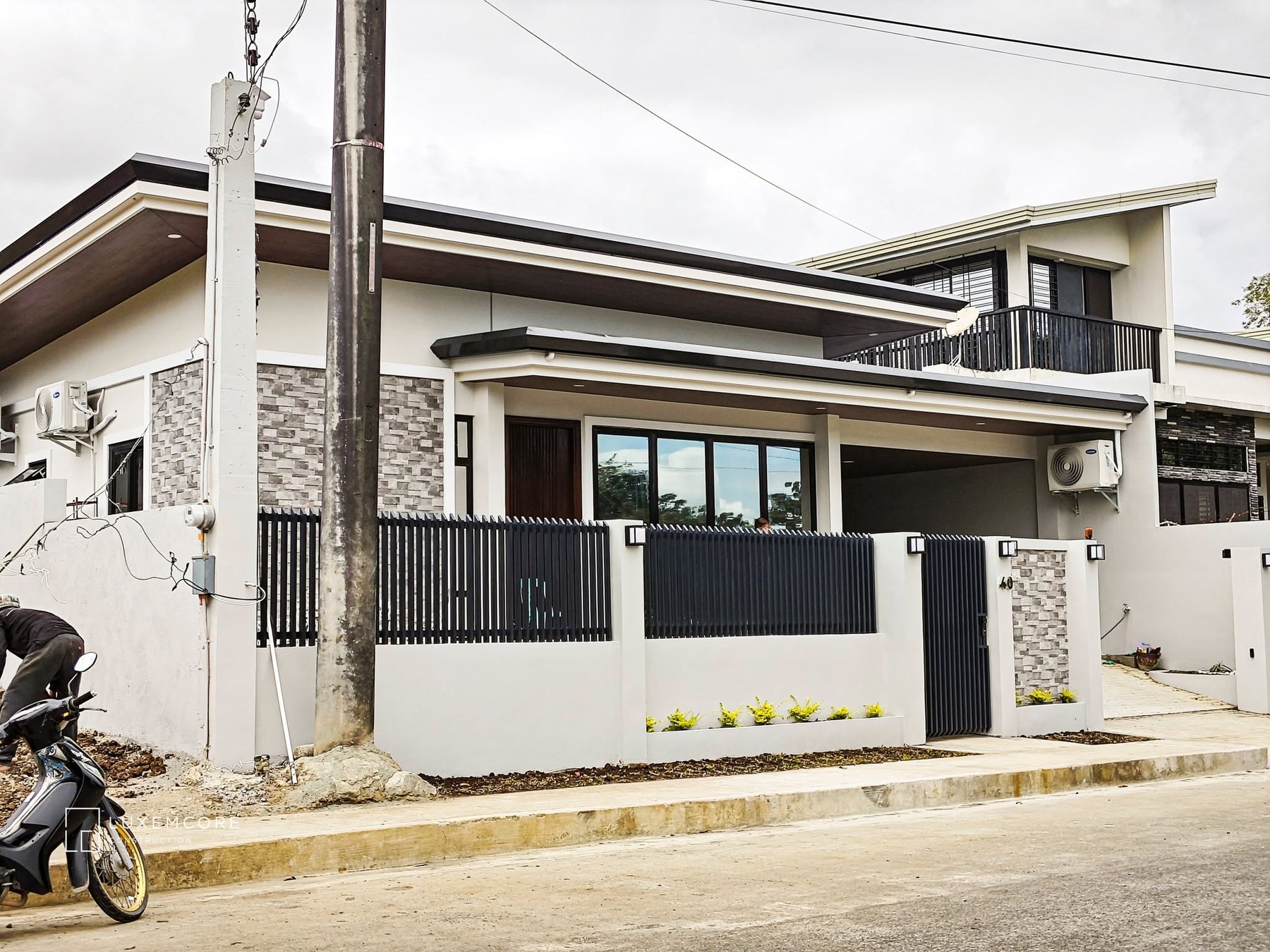
Floor area is obvious, but we also watch the finish schedule, roof and façade complexity, windows and doors, cabinetry, plumbing fixtures, electrical package, foundation requirements, lot elevation, access and external works. A beautiful reference photo can quietly bring several of those cost drivers at once.
Why “same size” does not mean “same price”
A 120 sqm house on a flat subdivision lot and a 120 sqm house requiring major filling, retaining work or difficult deliveries should not be expected to carry the same cost. The owner is paying for work, materials, logistics and risk—not just square meters.
What we ask before giving a more useful budget range
- Location and lot condition
- Approximate target floor area
- Number of rooms and special spaces
- Preferred finish level
- Whether plans already exist
- Fence, gate, cabinets and other external inclusions
- Target construction timing
Our preferred progression: range → estimate → BOQ
We are comfortable giving a planning range early as long as it is labeled correctly. As information improves, the costing should improve too. By the time the owner is comparing contractors or preparing to sign, the project should no longer depend on a generic national rate.
Frequently asked questions
How much does it cost to build a 100 sqm house?
There is no single reliable total based on 100 sqm alone. Floor area is only one input; structure, site condition, roof form, bathrooms, windows, cabinetry, finishes and external works can materially change the cost.
Is a per-square-meter rate a quotation?
Not by itself. It is most useful as an early planning guide. A quotation should be supported by enough plans, specifications, scope and site information to identify what the price includes.
Are permits included in construction cost?
Sometimes, but not automatically. The proposal should state whether permit fees, signed and sealed plans, processing assistance and related professional requirements are included.
Are fence, gate and site development normally included?
Only when the scope says so. These items can represent a meaningful additional budget, especially on large or sloping lots.
Should I prepare a contingency?
For early planning, it is sensible to leave room for design changes, site conditions and owner selections. The appropriate amount depends on how complete the plans and scope already are.
Need a realistic starting budget for your house?
Share the location, lot condition, target floor area and finish level. Those four items already make the first construction-cost discussion much more useful.
Start a Project Discussion